
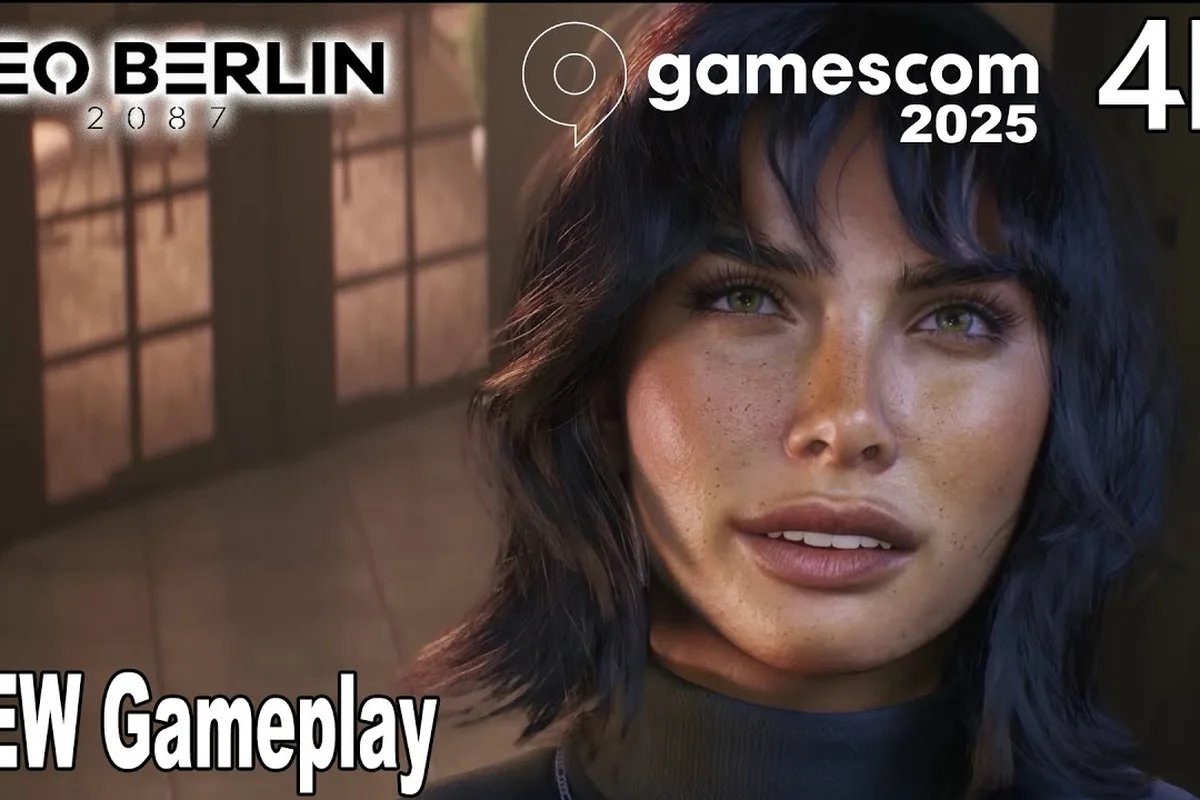
The neo berlin 2087 complete guide starts with the hardware reality check: this cyberpunk detective thriller from Berlin studio Elysium Game Studio pushes Unreal Engine 5 hard, and knowing your PC specs before launch day saves you from a stutter-filled first impression. Whether you are chasing ray-traced neon reflections or just want a stable 60 FPS through the crime scenes, this guide breaks down every graphics option, performance target, and display compatibility detail you need. Whether you are chasing ray-traced neon reflections or just want a stable 60 FPS through the crime scenes, this guide breaks down every graphics option, performance target, and display compatibility detail you need—and once your framerate is locked in, the same attention to tactical positioning applies when you're learning how to use the environment for a clean takedown in our Neo Berlin 2087 Cover System breakdown.
NEO BERLIN 2087 System Requirements Breakdown
The official Steam listing for NEO BERLIN 2087 confirms a 2028 release window across PC, PS5, and Xbox Series X|S, with the PC version available on both Steam and Epic Games Store. Since the game targets current-gen hardware with Unreal Engine 5's Nanite and Lumen systems, the minimum specs are surprisingly approachable while the recommended tier demands serious GPU muscle.
| Component | Minimum Specs | Recommended Specs | Ultra Ray Tracing Specs |
|---|---|---|---|
| CPU | Intel Core i5-10400 / AMD Ryzen 5 3600 | Intel Core i7-12700 / AMD Ryzen 7 5800X | Intel Core i9-13900K / AMD Ryzen 7 7800X3D |
| GPU | NVIDIA GTX 1660 Super / AMD RX 5600 XT | NVIDIA RTX 3070 / AMD RX 6800 XT | NVIDIA RTX 4080 / AMD RX 7900 XTX |
| RAM | 16 GB DDR4 | 16 GB DDR4 | 32 GB DDR5 |
| Storage | 85 GB SSD | 85 GB NVMe SSD | 85 GB NVMe SSD |
| OS | Windows 10 64-bit | Windows 11 64-bit | Windows 11 64-bit |
The gap between minimum and recommended specs reflects how the game's memory reconstruction mechanic and seamless first-to-third person transitions tax the CPU heavily, because every scene change triggers real-time asset streaming. Players on older quad-core processors report that the NPC density system in the Kiez district becomes the bottleneck, even when the GPU has headroom to spare.
Storage and VRAM Considerations
The 85 GB install size assumes you want the high-resolution texture pack included by default, which is why the developers recommend an NVMe drive for the recommended tier. If you are running a SATA SSD, expect longer load times when fast-traveling between the Wall districts and the underground tunnels, though the game does not require a hard drive at any settings level.
VRAM usage scales aggressively with the distance draw setting, which controls how far the city's procedurally placed neon signs and holographic advertisements render. At 1440p with high textures, the game consumes roughly 8 GB of VRAM, while 4K ultra pushes past 11 GB, so a 12 GB card is the safe floor for high-resolution play.
NEO BERLIN 2087 Graphics Settings Explained
The graphics options menu in NEO BERLIN 2087 follows the standard Unreal Engine 5 layout, but several settings have outsized performance impacts that are not obvious at first glance. The Lumen global illumination toggle is the single most demanding option, because it replaces baked lighting with real-time ray-traced indirect light that bounces off the city's wet streets and glass facades.
| Graphics Setting | Performance Impact | Visual Impact | Recommended Value |
|---|---|---|---|
| Lumen GI | Very High | High | Medium on RTX 3060 / High on RTX 4070+ |
| Nanite Mesh Detail | Low | High | Ultra (always keep on) |
| Shadow Quality | Medium | Medium | High |
| Volumetric Fog | High | Medium | Medium |
| Post-Processing | Low | Medium | High |
The Nanite mesh detail setting should stay on Ultra regardless of your GPU, because the system dynamically scales geometry complexity based on your hardware without a visible quality drop. This is the rare case where the highest setting costs almost nothing, since Nanite streams only the visible triangle data rather than loading the full city model into memory.
DLSS, FSR, and Frame Generation Options
NEO BERLIN 2087 supports both NVIDIA DLSS 3.5 and AMD FSR 3.1, with Intel XeSS also available for Arc GPU owners. The frame generation toggle in the DLSS menu doubles your frame rate in CPU-bound scenes, which matters because the investigation sequences with multiple NPC witnesses tax the processor heavily.
| Upscaling Mode | Quality Preset | Performance Gain | Image Quality |
|---|---|---|---|
| DLSS Quality | 1440p → 1080p render | 35-45% | Near native |
| DLSS Balanced | 1440p → 960p render | 55-65% | Slightly soft |
| FSR Quality | 1440p → 1080p render | 30-40% | Good, minor shimmer |
| Native TAA | 1440p native | Baseline | Sharpest, lowest FPS |
Players report that DLSS Quality at 1440p delivers the best balance for the crime scene reconstruction sequences, because the temporal upscaling handles the ghosting artifacts that appear when the memory playback rewinds through a room. FSR 3.1 works well on AMD cards but shows slight shimmering on the holographic billboards in the Wall district, which is a minor trade-off for the frame rate boost.
NEO BERLIN 2087 Ray Tracing Performance Guide
The ray tracing implementation in NEO BERLIN 2087 covers reflections, shadows, and ambient occlusion, with each toggle consuming different amounts of GPU headroom. The ray-traced reflections setting is the visual star of the game, because the rain-soaked streets and glass towers create constant reflective surfaces that look dramatically better with RT enabled.
| RT Setting | RTX 4070 (1440p) | RTX 4080 (1440p) | RTX 4090 (4K) |
|---|---|---|---|
| RT Off | 95 FPS | 120 FPS | 110 FPS |
| RT Reflections Only | 65 FPS | 85 FPS | 85 FPS |
| RT Reflections + Shadows | 52 FPS | 70 FPS | 72 FPS |
| Full RT (All Options) | 38 FPS | 58 FPS | 62 FPS |
The performance numbers above come from community testing on the Gamescom 2025 demo build, which used the same engine configuration as the final release according to the developers. Full ray tracing at 4K requires an RTX 4090 or RX 7900 XTX to maintain 60 FPS, while the RTX 4080 handles 1440p with all RT options enabled at a comfortable frame rate.
Optimizing RT Settings for Your GPU
The smart approach is to enable ray-traced reflections only, because this single setting delivers 80% of the visual upgrade while costing half the performance of the full RT suite. The RT shadows toggle is the least impactful option, since the game's baked shadow maps already look convincing in most indoor scenes, and the difference only becomes noticeable in the neon-lit outdoor areas.
For RTX 40-series owners, combining DLSS Quality with RT reflections and shadows gives the best visual-to-performance ratio, because the upscaler compensates for the RT overhead while preserving the reflective detail. Players with RTX 30-series cards should stick to RT reflections only at 1440p, since enabling all RT options drops the frame rate below the 50 FPS threshold that makes the combat sections feel sluggish.
NEO BERLIN 2087 Ultrawide Support and Display Settings
The ultrawide support in NEO BERLIN 2087 is a welcome surprise, because many Unreal Engine 5 titles ship with broken 21:9 support that either stretches the HUD or crops the vertical field of view. Elysium Game Studio confirmed native 21:9 and 32:9 support in the PC version, with the HUD elements repositioned to the screen edges rather than stretched across the full width.
| Aspect Ratio | Resolution | FOV Adjustment | HUD Behavior |
|---|---|---|---|
| 16:9 | 1920×1080 / 2560×1440 | Standard | Centered |
| 21:9 | 3440×1440 / 5120×2160 | +10° vertical | Edge repositioned |
| 32:9 | 5120×1440 | +15° vertical | Edge repositioned |
| 16:10 | 2560×1600 | Slight vertical crop | Centered |
The field of view slider ranges from 70 to 110 degrees, and the game automatically adjusts the vertical FOV when switching between first and third person perspectives during combat. This matters because the seamless perspective switch is a core mechanic, and a poorly configured FOV can cause motion sickness when the camera transitions mid-fight.
Display Compatibility and HDR Implementation
NEO BERLIN 2087 supports both HDR10 and Dolby Vision on PC, with the HDR calibration tool available in the display settings menu. The game's HDR peak brightness setting should match your monitor's actual peak output, because the neon signs and holographic advertisements clip badly if the value is set too high.
Players with OLED monitors report that the local dimming zones setting in the game's HDR menu helps prevent blooming around the bright neon elements, though this option is only available on displays that support it. For standard IPS panels, the game's HDR implementation still looks good, but the contrast ratio limitations mean the dark alley scenes lose some shadow detail compared to OLED displays.
NEO BERLIN 2087 Performance Optimization Tips
Getting the best performance from NEO BERLIN 2087 requires understanding which settings matter most for your specific hardware configuration, because the game's engine scales differently across GPU architectures. The dynamic resolution scaling option in the display menu automatically adjusts the render resolution to maintain your target frame rate, which is a lifesaver for the combat-heavy sections.
-
Set DLSS or FSR to Quality mode first, then adjust other settings based on remaining headroom
-
Enable frame generation if you have an RTX 40-series GPU or an AMD RX 7000-series card
-
Lower volumetric fog to medium before touching texture quality, since the fog has minimal visual impact
-
Disable motion blur if you notice ghosting during the perspective-switch combat transitions
-
Cap your frame rate at your monitor's refresh rate to avoid GPU overheating in the city hub areas
The texture streaming pool setting controls how much VRAM the game uses for loading high-resolution textures, and setting it to match your GPU's VRAM capacity prevents stuttering when fast-traveling between districts. Players with 8 GB cards should set this to medium, while 12 GB and higher cards can safely use the high or ultra presets.
CPU Bottleneck Solutions
The investigation sequences in NEO BERLIN 2087 are heavily CPU-bound, because the game simulates multiple NPC witnesses with individual AI routines during crime scene reconstruction. The NPC density slider in the gameplay settings reduces the number of background characters in the city streets, which can recover 10-15 FPS on older processors.
Players running the game on a Ryzen 5 3600 or Intel i5-10400 should also disable background simulation in the advanced settings, which stops NPC schedules from running when they are off-screen. This setting has zero visual impact but significantly reduces CPU load in the open-world sections, making it the single best optimization for mid-range processors.
Frequently Asked Questions
What are the minimum system requirements for NEO BERLIN 2087?
The minimum specs require an Intel Core i5-10400 or AMD Ryzen 5 3600, 16 GB of RAM, and an NVIDIA GTX 1660 Super or AMD RX 5600 XT. These specs target 1080p at 30 FPS with medium settings, which is playable but not ideal for the fast-paced combat sections.
Does NEO BERLIN 2087 support DLSS and FSR?
Yes, the game supports NVIDIA DLSS 3.5, AMD FSR 3.1, and Intel XeSS, with frame generation available on RTX 40-series and RX 7000-series GPUs. DLSS Quality mode at 1440p delivers the best image quality to performance ratio according to community testing.
Is ray tracing worth the performance cost in NEO BERLIN 2087?
Ray-traced reflections alone provide the most visual impact per frame cost, making it the recommended RT setting for most players. Full ray tracing with shadows and ambient occlusion requires an RTX 4080 or better for 60 FPS at 1440p, so budget-conscious players should enable reflections only.
What is the best graphics settings preset for a mid-range PC?
For an RTX 3060 or RX 6700 XT, use the high preset with DLSS or FSR Quality mode, then enable ray-traced reflections only and lower volumetric fog to medium. This configuration delivers roughly 60 FPS at 1440p while preserving the game's visual identity.
Does the game support ultrawide monitors at launch?
Yes, NEO BERLIN 2087 natively supports 21:9 and 32:9 ultrawide at launch, with proper HUD repositioning and FOV scaling—no stretched UI or cropped view. For full-screen ray tracing at 3440×1440, target an RTX 4080 or RX 7900 XTX, as detailed in our Ray Tracing Performance Guide.