
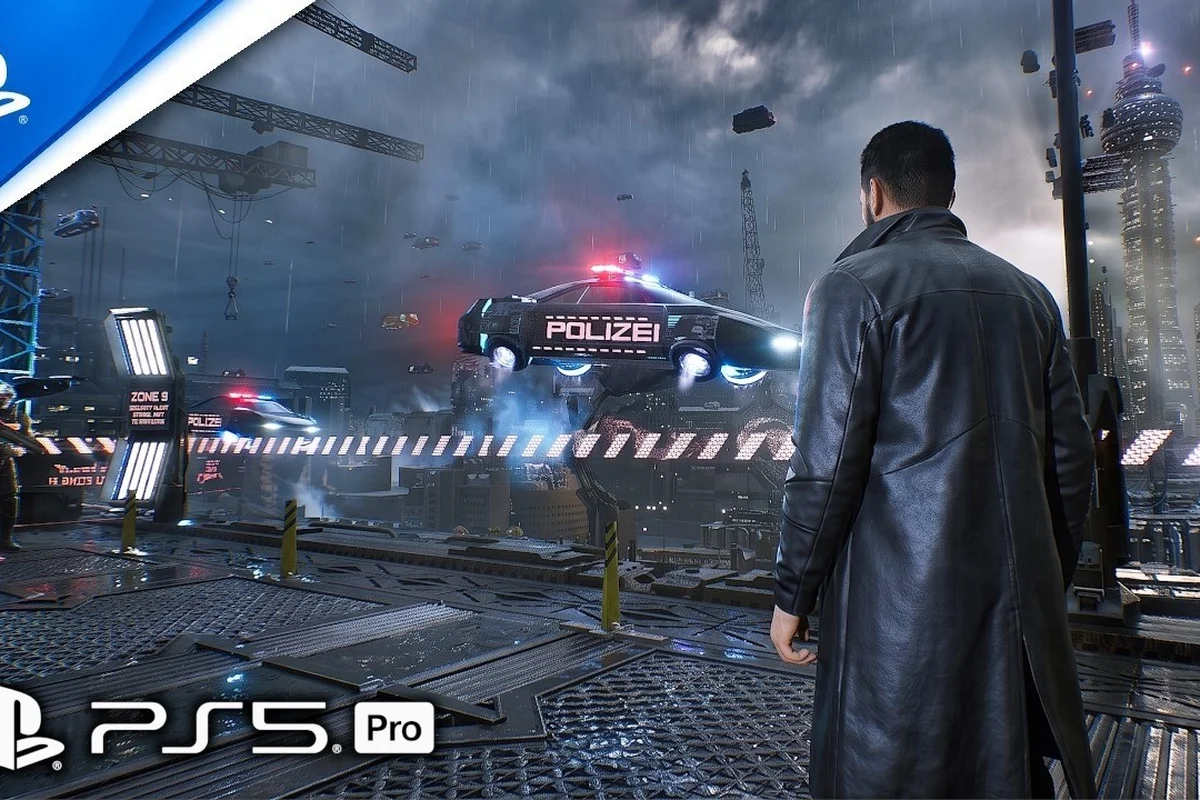
NEO BERLIN 2087's signature ability is memory reconstruction, a detective tool that lets Nolan step into the shoes of victims and relive their final moments. The official line from Elysium Game Studio is that "memory itself is a weapon," and understanding how to activate and read these reconstructed scenes is the fastest way to solve the Police Chief's murder case. This guide walks through the full workflow, from scanning a crime scene to locking in the right evidence before you save your game.
Memory reconstruction is not a passive cutscene — it is an interactive investigation layer. When Nolan activates the ability on a relevant object or person, the world around him fragments into a replayable memory that you can scrub, pause, and examine for hidden details. Because the game launches in 2028 and detailed system specifics remain unconfirmed, the mechanics below are drawn from the official Steam description, the Gamescom gameplay trailers, and the developer's own commentary, so treat exact button prompts as provisional until launch.
Why Memory Reconstruction Is the Core Mechanic
Every detective thriller needs a hook that separates it from a standard shooter, and for NEO BERLIN 2087 that hook is the ability to reconstruct memories. The Steam page explains that Nolan "relives the last moments of victims," stepping directly into their perspective to pay close attention to the past unfolding in front of his eyes. This transforms the investigation loop: instead of reading case files, you physically inhabit a crime scene at the moment it happened.
The mechanic reinforces the game's thematic core. In a city divided by technology, wealth, and class, memories are the one form of evidence that cannot be forged or hidden behind the new Berlin wall. The ruling elite may control the districts and the outcast settlements may fight over resources, but a reconstructed memory gives Nolan access to the truth that everyone else wants buried. That is why the ability is described as a weapon rather than a tool.
Memory reconstruction also feeds directly into the choices that shape the ending. Because you decide which details to trust and which leads to follow, the way you interpret a reconstructed scene influences dialogue options, faction allegiances, and ultimately which of the multiple endings you reach. This makes learning the mechanic a priority even for players who plan to focus on combat or stealth.
How the Ability Fits the Investigation Loop
The full investigation loop in NEO BERLIN 2087 connects several systems, and memory reconstruction sits in the middle of them. The sequence typically begins with a crime scene, moves through evidence collection, and culminates in a reconstructed memory that reveals the next clue. Our investigation guide covers the broader flow, but the breakdown below shows where the ability plugs in.
| Investigation Step | What You Do | How Memory Reconstruction Helps |
|---|---|---|
| 1. Scan the scene | Use detective gadgets to mark every object and body | Identifies which objects carry a memory anchor |
| 2. Gather evidence | Collect physical clues and notes | Provides context for interpreting the memory |
| 3. Reconstruct | Activate the ability on the anchor | Lets you relive the victim's final moments |
| 4. Interpret | Scrub the replay for hidden details | Reveals suspects, weapons, or conversations |
| 5. Act | Choose dialogue or follow a trail | Sets up the next crime scene or confrontation |
This loop repeats across the investigation, and each pass deepens the conspiracy behind the Police Chief's murder. Players who master the reconstruction step will find that clue locations and witness testimonies connect far more smoothly, while players who rush through it may miss critical information that closes off dialogue branches later.
How to Activate Memory Reconstruction
The exact input to trigger memory reconstruction depends on whether you are playing in first person or third person, since NEO BERLIN 2087 lets you switch perspectives seamlessly. In the Gamescom 2025 gameplay trailer, Nolan is shown approaching a marked object and holding a prompt that shifts the camera into the memory space. Based on the footage, the activation flow is consistent regardless of perspective: approach the glowing anchor, confirm the interaction, and the screen transitions into the replay.
Once inside a memory, the view becomes a ghostly recreation of the past. You can typically move through the scene, look around, and use a scrub control to rewind or fast-forward the events. This is where the game rewards patience — the critical detail is often not in the first pass but in a small action that happens in the background of the replay, such as a hand reaching for a weapon or a door opening in the distance.
What Makes an Object a Memory Anchor
Not every object in NEO BERLIN 2087 can be reconstructed. The ability works on items and locations that carry strong emotional or causal weight from the victim's final moments. Common anchors include the murder weapon, a personal possession, a doorway the victim passed through, or even a wall with scratches that hint at a struggle. The Steam description notes that Nolan uses his unique ability to "understand human behavior," which means he reads the subtext of a scene rather than just its surface.
To identify potential anchors, scan the crime scene thoroughly with your detective mode first. Objects that react to the scan with a distinct highlight are candidates for reconstruction. If you skip the scan step, you will likely miss anchors and have to rely on guesswork. Building a habit of scanning every room before interacting is one of the best tips for both beginners and returning players.
Step-by-Step Memory Reconstruction Guide
To get the most out of the ability, follow this step-by-step process every time you reach a crime scene. The order matters because each step feeds information into the next, and skipping ahead can leave you without the context needed to interpret the memory correctly.
-
Clear the area of immediate threats. If enemies are present, deal with them through combat or stealth before activating the ability, because the replay cannot be interrupted without losing progress.
-
Open detective mode and scan the entire scene. Mark every piece of evidence, note the layout, and identify which objects respond as memory anchors.
-
Approach the most promising anchor and activate memory reconstruction. Start with the anchor that is closest to the victim's body, since it usually contains the most detailed sequence.
-
Watch the replay once without touching the controls. This gives you the overall shape of the event and lets you spot obvious clues such as a masked figure or a dropped item.
-
Rewind and scrub the replay a second time. Focus on the background and the edges of the frame, where subtle details like a shadow or a reflection often hide.
-
Note the dialogue or sound cues. Memory reconstruction may include audio, so listen carefully for names, addresses, or phrases that did not appear in the initial scan.
-
Return to the present and cross-reference what you saw with the physical evidence. If a clue contradicts the memory, that contradiction is itself a lead.
Following this routine ensures that no reconstructible scene is wasted, and it also trains you to notice the kind of small details that the game's best investigations are built around.
Using the Scrub and Pause Controls
The scrub control is the most powerful part of memory reconstruction. Because the replay can be paused and rewound, you are never forced to catch a detail on the first pass. When you spot something suspicious, pause the replay and examine the frame from multiple angles. Some developers have confirmed that certain clues are only visible from a specific viewing angle, so moving the camera around the frozen frame can reveal writing on a wall or a symbol on a piece of clothing.
The pause function also helps with the audio component. If you hear a voice you cannot place, pause and replay the line while watching the speaker's face. In a city full of factions and rivaling settlements, recognizing a voice can be the difference between identifying a suspect and walking past them. Make a habit of pausing whenever anything feels slightly off, because your instinct is usually pointing at a hidden detail.
Common Mistakes When Reconstructing Memories
Even skilled players make predictable mistakes with memory reconstruction, and most of them come from treating the ability like a normal cutscene. The first mistake is skipping the initial scan, which leaves you unaware of which objects are anchors and what context you should be looking for. The second is watching the replay only once and assuming you saw everything, when the game explicitly rewards multiple passes with the scrub control.
A third mistake is ignoring the environment outside the memory. When the replay ends, the present-day scene still contains evidence that corresponds to what you just saw. If you notice a broken lock in the memory, check the actual lock on the door before moving on. Players who only focus on the memory itself miss the connective tissue that makes the investigation coherent. Our crime scene investigation guide goes deeper into the scanning side of this workflow.
Another frequent error is saving your game at the wrong moment. Since NEO BERLIN 2087 supports manual saves, you should save before activating a reconstruction on a scene with branching interpretations. If you later discover that a choice locked out an important lead, you can reload and reinterpret the memory with fresh eyes rather than replaying an entire chapter.
Save Game Strategy for Memory Reconstruction
Saving is directly tied to how comfortably you can experiment with memory reconstruction. Because the ability can be interpreted in multiple ways and the game tracks your choices, the position of your save file determines how much freedom you have to correct mistakes. The recommended approach is to keep one rotating save slot just for investigations, updating it before each major crime scene and keeping an older backup from the start of the current chapter.
This is especially important given the multiple endings structure. The endings guide notes that dialogue decisions and moral choices ripple forward to the finale, and a memory reconstruction that sends you down the wrong path can compound over several hours. By maintaining a save before each reconstruction, you preserve the ability to explore alternative interpretations without restarting your playthrough. The save game system in NEO BERLIN 2087 appears to allow full manual control, though the exact number of slots remains to be confirmed at launch.
A practical table for save planning looks like this, and it assumes you are comfortable keeping a handful of slots active rather than relying on a single autosave, which is the difference between experimenting freely and replaying long stretches after a wrong turn.
| Save Point | When to Create | Why It Matters |
|---|---|---|
| Chapter start | After the first cutscene | Gives a clean replay point for the whole chapter |
| Before major scan | Prior to a multi-anchor crime scene | Lets you re-scan without losing progress |
| Before reconstruction | Right before activating the ability | Enables alternative interpretations |
| After a key dialogue | Following a conversation that forks the story | Preserves access to both branches |
| Before the finale | At the last save before endings | Unlocks every ending on one save file |
- Adopting this habit means you can treat memory reconstruction as a sandbox rather than a single-shot test, which dramatically reduces frustration on a first playthrough.
How Memory Reconstruction Ties Into the Full Game
Memory reconstruction is not an isolated minigame — it is the connective tissue of the entire NEO BERLIN 2087 experience. The story guide describes how the conspiracy behind the Police Chief's murder unfolds through a series of reconstructed scenes, each one peeling back another layer of the dystopian city's secrets. The ability is also how the game justifies its first- and third-person switching, since the memory sequences use the perspective system to place you inside the victim's head.
A full completion run becomes far smoother when you master the ability early, because hidden details inside reconstructed memories unlock optional dialogue, secret locations, and alternate interpretations that count toward achievements. Since the game encourages multiple playthroughs, treating reconstruction as a skill you refine rather than a gimmick you click through will make each run more rewarding. Our new game plus guide explains how your choices carry forward on subsequent runs.
The developer's framing of memory as a weapon also applies to the moral weight of the mechanic. Each reconstruction confronts you with a moment of another person's life, and how you use that knowledge shapes the justice-and-betrayal themes that run through the narrative. Players who engage with the ability thoughtfully will find that it elevates the story far beyond a simple detective thriller.
Reading Details Inside a Reconstruction
The most valuable skill in memory reconstruction is learning to read the details that the game hides inside each replay. The developers have confirmed through the trailers that these scenes are dense with information, and the pause-and-scrub controls exist precisely so you can pull them apart. Some clues are visual, such as the position of a weapon or the direction of a door; others are auditory, such as a name spoken off-screen or the sound of a vehicle; and a few are environmental, like the state of a lock or the reflection in a window.
| Clue Type | Where to Look | How to Use It |
|---|---|---|
| Weapon placement | Victim's hands and nearby surfaces | Ties the murder weapon to a suspect |
| Door direction | Background doorways | Shows how the attacker fled |
| Spoken names | Audio track | Adds names to the witness list |
| Vehicle sounds | Ambient audio | Places the crime at a specific location |
| Lock state | Doors and windows | Reveals whether entry was forced |
| Window reflections | Mirrors and glass | Hides faces and license plates |
A practical technique is to pause the replay at the moment before a key action and then switch to third person to circle the frozen scene. Some hidden writing or symbols are only legible from a specific angle, and moving the camera can reveal a name scratched into a wall or a logo on a piece of equipment. Cross-referencing what you find against the physical evidence board is where the investigation loop pays off, because a contradiction between the memory and the scene is often the strongest lead the game gives you. As you progress into the later chapters, the reconstructions grow more complex and the hidden details become more consequential, which is why building this reading habit early makes the entire case flow more smoothly. The evidence board guide on this wiki explains how to organize the clues you gather from each reconstruction into a coherent theory.
Quick Reference: Anchor Categories
When you enter a crime scene, keep these anchor categories in mind so your scan covers everything that can be reconstructed, because a single missed anchor can leave a case stalled until you return to the room.
-
Murder weapon: almost always the first anchor worth activating, since it shows the attack itself.
-
Personal possession: a watch, a badge, or a letter often carries the victim's last emotional moment.
-
Doorway: reconstructing a door reveals who entered and who fled, including faces in the frame.
-
Scratched wall: a struggle usually leaves marks that replay the fight from the victim's view.
-
Vehicle: a car or train interior can place the crime at a specific location in Neo Berlin.
-
Broken object: a shattered screen or lamp often triggers a memory of the moment it was smashed.
-
Security terminal: hacking the terminal before reconstructing can add a timestamp to the memory.
-
Window reflection: the glass sometimes shows a face the camera angle otherwise hides.
Each category rewards a different reading habit, so spend your first pass scanning every anchor type before you commit to a single reconstruction. The more categories you cover, the more likely you are to catch the detail that breaks the case open.
Frequently Asked Questions
Can you replay a memory reconstruction more than once?
Yes, you can replay a memory reconstruction as often as you need. The replay supports scrubbing, pausing, and rewinding, and there is no penalty for making multiple passes through the same scene. The design actively rewards a second viewing because the most important clue is often tucked into the background or the audio track, and pausing the
Does memory reconstruction work on every object in the game?
No, memory reconstruction only works on objects that carry strong emotional or causal weight from a victim's final moments. The murder weapon, a personal possession, or a doorway the victim passed through can become an anchor, but ordinary props stay inert.
Is the ability available in both first and third person?
Yes, the ability works in both perspectives, and you can switch between them seamlessly before or during the replay. The perspective you use when activating the memory is the one you explore inside it, so experimenting is worthwhile. Some players find that a first-person view makes small handwriting legible, while third person is better for tracking the
Will choices made during a reconstruction affect the endings?
They can, because the game tracks which clues you choose to trust and which leads you decide to follow. A reconstruction that steers you toward one suspect can close off dialogue branches and faction allegiances, and those decisions ripple forward to the finale.
Do I need to save before every reconstruction?
You do not strictly need to, but it is strongly recommended for the most complex scenes. Manual saves give you a clean point to return to if a choice locks out an important lead, and they make 100% completion runs far less stressful.