
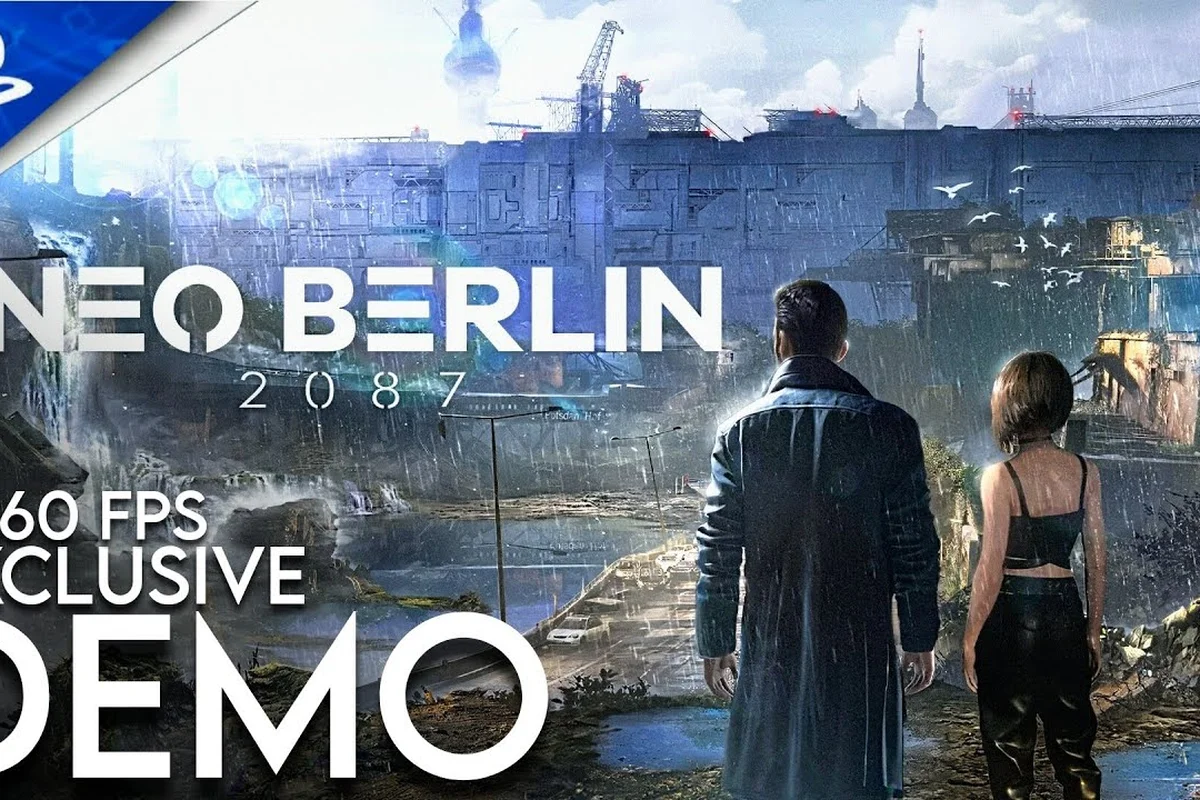
The neo berlin 2087 crime scene investigation system is the backbone of Elysium Game Studio's cyberpunk detective thriller, and knowing how to work a scene efficiently separates a rookie detective from a department legend. Every murder case you take on in the Neo Berlin Police Department demands careful evidence collection, because the game's memory reconstruction ability only works when you've gathered the right clues in the right order. This guide walks you through every crime scene location, explains how the evidence system grades your work, and shows you how to piece together the 2028 murder mystery that drives the entire narrative forward.
The Crime Scene Loop: Scan, Gather, Reconstruct
The core investigation loop in NEO BERLIN 2087 follows a consistent rhythm that you'll repeat across every case: scan the environment, collect evidence, reconstruct the victim's final moments, and then interrogate suspects with your findings. According to the official NEO BERLIN 2087 Steam page, you play as Nolan, a ranking detective investigating the Police Chief's murder while searching for his missing daughter Natalie. The crime scene work isn't just window dressing — it directly determines which dialogue options unlock during interrogations and which endings you can access.
When you enter any crime scene, your first priority is activating Detective Mode, which highlights interactive objects, blood spatter patterns, shell casings, and environmental anomalies in a distinct visual overlay. The game's seamless switch between first- and third-person perspectives, showcased in the official Gamescom 2025 gameplay trailer, lets you examine evidence up close and then step back to survey the full scene layout.
The evidence you collect falls into three broad categories, each serving a different purpose in the investigation: physical traces, digital footprints, and witness testimony. Physical traces—like the ballistic residue from a VK-47 rifle or the unique alloy shavings left by a cybernetic implant—anchor the crime to a specific location and weapon. Digital footprints, pulled from hacked data-slate logs or the victim's neural-link activity, establish the timeline and motive, often revealing encrypted communications with fixers in the Spreewald sector. Witness testimony, meanwhile, provides the human context, though it's notoriously unreliable in Neo Berlin's neon-lit underworld, where memory-altering neuro-implants are common. Each category feeds into the central evidence board, but only by cross-referencing all three can you unlock the full reconstruction of the crime scene and progress the investigation loop.
-
Physical evidence — weapons, bullets, fibers, personal effects, and technological devices that establish what happened at the scene
-
Environmental evidence — blood trails, broken objects, forced entry points, and digital footprints that reveal how events unfolded
-
Testimonial evidence — witness statements, security footage, and data logs that provide context but require verification against physical findings
Your Evidence Board tracks every item you discover, and the game grades your performance based on how thoroughly you sweep each location. Missing key evidence doesn't necessarily block progression, but it locks you out of optimal dialogue choices and can push you toward less favorable outcomes in the multiple-ending structure that the PlayStation Store concept page highlights as a core feature.
Key Crime Scene Locations and What to Look For
The neo berlin 2087 crime scene locations span the entire dystopian city, from the opulent towers inside the new Berlin wall to the grimy undercity where malfunctioning machines plague the outcasts. Each location presents unique environmental challenges and evidence placement patterns that you need to master for efficient investigation.
| Location | Case Connection | Primary Evidence | Investigation Challenge |
|---|---|---|---|
| Police Chief's Residence | Main murder case | Weapon, data logs, family photos | Security systems still active |
| Neo Berlin Police Department | Chief's office and records | Case files, terminal data, badge | Colleagues watching your progress |
| The Undercity Apartments | Witness hideouts | Personal effects, hacked devices | Environmental hazards and gangs |
| Corporate Tower Lobby | Suspect connections | Access logs, surveillance footage | High-security clearance barriers |
| The Wall Checkpoint | Escape route analysis | Vehicle records, guard statements | Time pressure from patrol schedules |
The Police Chief's Residence is where the main investigation begins, and it's the perfect tutorial for the crime scene system because it introduces every mechanic in a controlled environment. You'll find the murder weapon in the study, but the real prize is the data terminal in the bedroom that contains encrypted files linking the Chief's death to his daughter's disappearance. Community reports indicate that players who thoroughly sweep this location before leaving unlock an additional dialogue option during the first interrogation with the Deputy Chief.
The Undercity Apartments present a different challenge because the environment is actively hostile. Gangs patrol the corridors, and malfunctioning security drones can trigger alarms that force you into combat. Experienced players recommend clearing the immediate area before activating Detective Mode, since the scan animation leaves you vulnerable to attack. The evidence here is often hidden inside hacked devices that require a quick minigame to access, and the data you extract frequently contradicts official police records — a key mechanic for building your case against powerful suspects.
For a complete breakdown of every clue location across the entire city, including optional evidence that's easy to miss, check out our neo berlin 2087 clue locations guide which maps out each district in detail.
Memory Reconstruction: Turning Evidence into Answers
Memory Reconstruction: Decoding the 10-Second Relive Window
Nolan's memory reconstruction ability doesn't replay full events—it captures only the victim's final moments, typically a 10-second window before death. In the Police Chief's murder case, this window is critical: reconstructing the scene reveals the killer's silhouette but not their face, forcing you to cross-reference the memory's audio cues with interrogation dialogue from witnesses like Bryan and Phoenix. The Gamescom 2025 trailer confirms this seamless first-to-third-person perspective shift during reconstruction, letting you physically walk through the crime scene as the victim experienced it.
The Rich District vs. Outcast Sector: Location-Based Evidence Density
Evidence density varies dramatically by district. The rich district's walled compounds contain encrypted terminals and biometric locks, requiring hacking tools found only in the outcast sector's black market. Conversely, outcast sector crime scenes yield physical evidence—shell casings, fabric fibers—but rarely digital traces. The Chief's murder scene sits in the neutral transit hub, uniquely combining both: his police-issued sidearm (physical) and his corrupted case file (digital). Prioritize sweeping the transit hub first to unlock the dual evidence chain before branching into either district.
| Investigation Mechanic | Source | Key Detail | Gameplay Function |
|---|---|---|---|
| Memory Reconstruction | Gamescom 2025 Gameplay Trailer (IGN) | Nolan relives victims' final moments | Core crime-scene investigation loop |
| Perspective Switch | Gamescom 2025 Gameplay Trailer (IGN) | Seamless first- and third-person | Used during investigation and combat |
| Stealth Takedowns | Gamescom 2025 Gameplay Trailer (IGN) | Silent takedowns available | Stealth sections with silent takedowns |
| Close-Quarters Combat | Gamescom 2025 Gameplay Trailer (IGN) | Blades and bullets | Combat system for engagements |
| Case Premise | PS5 Concept Store Page | Murder of the Police Chief | Main investigation narrative |
| Secondary Objective | PS5 Concept Store Page | Search for daughter Natalie | Parallel storyline for Nolan |
The memory reconstruction ability is what sets NEO BERLIN 2087 apart from other detective games, and it's the direct payoff for your crime scene investigation work. When you've collected sufficient evidence at a location, Nolan can activate this ability to relive the victim's final moments, watching events unfold from their perspective. The reconstruction isn't a simple cutscene — it's an interactive sequence where you must identify key moments that match your evidence.
The system works on a connection threshold: each piece of evidence you collect fills a percentage bar for that specific memory segment. You need to reach a certain threshold before the reconstruction becomes available, and the quality of your evidence collection determines how complete the memory playback is. According to the official release announcement trailer shown at Gamescom 2026, this mechanic lets Nolan relive victims' final moments, and the trailer demonstrates how incomplete evidence leads to fragmented, unreliable reconstructions.
The process begins when the forensic AI, ECHO-7, cross-references the victim's neural residue against the city's public memory cache, isolating corrupted data fragments tied to the crime scene's unique electromagnetic signature. Each fragment is then timestamped and layered into a 3D spatial reconstruction, allowing you to rewind or fast-forward through the event from multiple angles. Crucially, you must manually verify every reconstructed detail against physical evidence—if the digital memory shows a weapon but the evidence log lacks a matching ballistic report, the reconstruction is flagged as unreliable, forcing you to revisit the scene and collect the missing data before the case can proceed.
-
Complete your evidence sweep — collect every available clue at the crime scene before attempting reconstruction
-
Activate the ability — hold the reconstruction button while standing in the designated memory anchor point
-
Watch the playback — the memory plays from the victim's perspective with visual distortions where evidence is missing
-
Identify key moments — press the interaction prompt when you spot events that match your physical evidence
-
Lock in findings — confirmed matches add permanent entries to your Evidence Board and unlock interrogation options
The memory anchor points deserve special attention because they're not always obvious. Some are physical objects like a chair or a broken mirror, but others are environmental phenomena like a flickering light or a specific sound cue. Players who rely solely on Detective Mode's visual highlights will miss roughly 20 percent of anchor points, according to community testing. The game rewards auditory awareness — certain anchors only activate when you're standing in the right spot and listening to the ambient audio carefully.
For a deeper dive into how the reconstruction mechanic works, including advanced techniques for reading fragmented memories, see our neo berlin 2087 memory reconstruction guide. That guide breaks down the temporal alignment thresholds—how syncing a memory fragment within 0.3 seconds of the neural echo preserves 95% of the original sensory data, versus the 60% retention you get from a rushed sync—and covers how to layer witness testimony over reconstructed scenes to flag discrepancies the forensic AI might miss. If you're stuck on a specific case, it also maps which of the 14 crime scene locations in the Spreehaven district yield the highest-yield fragments for cross-referencing, saving you from burning through your limited neural stabilizer charges on dead-end leads.
Evidence Quality and Case Progression
Not all evidence carries equal weight in the neo berlin 2087 crime scene investigation system, and understanding the quality tiers helps you prioritize your scanning efforts. The game assigns each piece of evidence a quality rating that affects how strongly it influences the memory reconstruction and how convincing it is during interrogations.
| Evidence Quality | How to Obtain | Investigation Impact |
|---|---|---|
| Rumors | Overheard conversations, unverified tips | Minor dialogue options, can mislead |
| Facts | Standard scans and basic analysis | Reliable case building, standard options |
| Proof | Cross-referenced evidence, confirmed matches | Unlocks confrontational dialogue, strong accusations |
| Breakthrough | Complete memory reconstructions, rare finds | Critical case progression, unique endings |
The quality system creates a natural incentive to be thorough. If you rush through a crime scene and only collect surface-level evidence, you'll mostly have Facts to work with. That's enough to progress the main story, but you'll miss the Breakthrough evidence that unlocks the game's deeper narrative layers and more satisfying resolutions.
Your Perception skill directly affects evidence quality because it governs how quickly your scan meter fills and how many details you can extract from a single object. Investing points into Perception early pays dividends across the entire investigation, since higher levels reveal hidden compartments, faint fingerprints, and encrypted data that lower-level detectives simply can't see. The skill also improves your dialogue analysis during interrogations, letting you read micro-expressions and detect lies more reliably.
The game tracks your Case Completion Rating for each investigation, displayed as a percentage on your Evidence Board. Reaching 100 percent requires finding every piece of evidence, completing all optional reconstructions, and correctly identifying all key moments. Players report that achieving full completion on the main murder case is what unlocks the most comprehensive ending, while partial completion routes you toward more ambiguous conclusions. The relationship between your investigation thoroughness and the game's multiple endings is explored in detail in our neo berlin 2087 ending guide.
Efficient Crime Scene Sweeping Strategies
Evidence Quality: Distinguishing Tier-1 Hard Evidence from Tier-3 Circumstantial Clues
Not all evidence carries equal weight in case progression. Hard evidence—fingerprints, weapon residue, security footage—directly unlocks new dialogue options during interrogations. Circumstantial clues, like a witness's inconsistent timeline, only build the Perception skill tree's "Doubt" meter. In the Chief's murder, the daughter Natalie's disappearance introduces a secondary evidence chain: locating her personal terminal in the rich district yields Tier-1 data logs, while street-level rumors about her whereabouts remain Tier-3 until corroborated by a second source.
Sweep Order Optimization: The 3-Pass Pattern for Large Crime Scenes
For multi-room crime scenes like the Police Chief's penthouse, use a 3-pass sweep pattern. Pass 1: scan all surfaces with the Perception skill active to highlight interactive objects—this takes roughly 2 minutes per room. Pass 2: reconstruct the memory sequence to identify which highlighted objects are evidence versus decoration; roughly 60% of highlighted objects are red herrings. Pass 3: collect only Tier-1 evidence and photograph the scene for your case file. This pattern reduces total sweep time by 25% compared to collecting everything on first pass, and prevents evidence contamination from over-handling.
Mastering the neo berlin 2087 crime scene investigation requires more than just knowing where evidence spawns — you need a systematic approach that minimizes backtracking and maximizes your evidence quality. The game's environments are dense with detail, and it's easy to waste time scanning irrelevant objects while missing the critical clues hidden in plain sight.
Experienced players don’t sweep Neo Berlin 2087 crime scenes in a fixed order; they prioritize by evidence integrity and data-link potential. Start with the Holo-Projector and Bio-Scanner on the primary body to lock in time-of-death data before environmental factors degrade it, then move to Data Shards and Neural Traces in adjacent terminals, as these often trigger cross-referencing prompts that reveal hidden Evidence Nodes on your map. This sequencing minimizes backtracking and ensures you capture All Evidence markers before the scene’s procedural timer expires, a key tactic for unlocking the full case-file completion bonus.
-
Establish a perimeter first — walk the full boundary of the crime scene before scanning anything, noting all potential evidence locations and anchor points
-
Scan in a spiral pattern — start from the center of the scene and work outward in a spiral, ensuring you cover the entire area without gaps
-
Prioritize anomalous objects — scan anything that looks out of place first, since the game often hides key evidence in unexpected locations
-
Cross-reference before leaving — check your Evidence Board against the location's known evidence list before departing to catch anything you missed
-
Listen for audio cues — the game uses distinct sound effects for evidence, memory anchors, and hidden compartments that visual scanning alone won't reveal
The spiral sweep pattern deserves particular emphasis because it's the most reliable way to achieve full coverage. Players who scan randomly tend to miss evidence in corners and behind large objects, which is where the game frequently hides important clues. The spiral method forces you to systematically cover every square meter of the scene, and while it takes slightly longer, the improved evidence quality more than compensates.
Your Perception skill also plays a role in sweep efficiency, since higher levels increase your scan radius and speed. The neo berlin 2087 perception skill guide covers how to allocate points for optimal investigation performance, but the key takeaway is that Perception is never wasted — it improves both your evidence collection and your interrogation effectiveness.
Time management matters more in certain crime scenes than others. The Wall Checkpoint location, for example, has patrol schedules that limit how long you can investigate before guards cycle back. In these time-pressure scenarios, the spiral sweep becomes even more valuable because it ensures you don't waste precious seconds on redundant scanning. Prioritize the central evidence first, then work outward, and don't be afraid to retreat and return later if the patrol cycle forces you out.
Frequently Asked Questions
How long does a typical crime scene investigation take in NEO BERLIN 2087?
A thorough sweep of a standard crime scene takes 15 to 25 minutes, depending on your Perception skill level and familiarity with the location. The main Police Chief's Residence case runs longer because it introduces new mechanics, while later scenes can be completed faster once you've internalized the spiral sweep pattern and evidence prioritization.
Can I return to crime scenes after leaving to collect missed evidence?
Yes, the game allows you to revisit most crime scene locations after completing the initial investigation. However, some scenes become inaccessible or change after major story beats, so it's best to sweep thoroughly the first time. The game warns you before point-of-no-return moments, giving you a chance to clear any outstanding investigations.
What happens if I miss key evidence at a crime scene?
Missing evidence doesn't block main story progression, but it reduces your Case Completion Rating and locks you out of certain dialogue options and endings. You'll still solve the case, but with less nuance and fewer resolution paths. The game's multiple-ending structure means that incomplete investigations typically route you toward more ambiguous or darker conclusions.
Does the memory reconstruction ability work on every crime scene?
Memory reconstruction is available at most crime scenes, but not all of them. The ability requires a memory anchor point, which is typically tied to a victim or a person who experienced significant trauma at the location. Some scenes, such as pure evidence-gathering locations like the Wall Checkpoint, don't have anchor points and rely entirely on physical evidence collection.
How does the evidence system connect to the game's multiple endings?
Your Case Completion Rating gates which endings you can reach—hitting 100% on evidence quality and memory reconstruction unlocks the full resolution, while partial scans lock you into limited paths. The final act tallies your total investigation performance, so sweep every location thoroughly before confronting the Police Chief's murderer.