
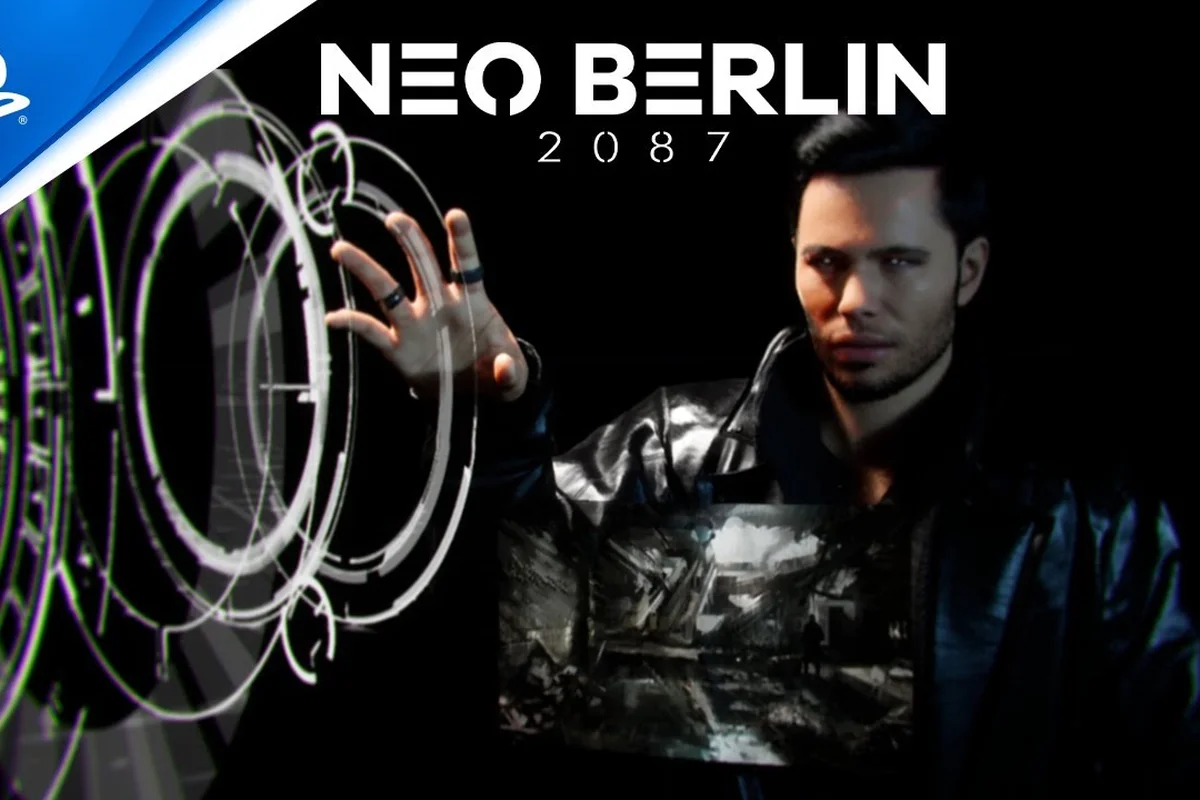
The rain-slicked streets of a divided Berlin, the hum of neon signs reflecting off wet asphalt, and a detective chasing a truth that cuts through class lines — the neo berlin 2087 inspiration blade runner lineage is unmistakable. Elysium Game Studio's upcoming cyberpunk detective thriller wears its influences proudly, drawing from Ridley Scott's 1982 masterpiece and Masamune Shirow's Ghost in the Shell to craft something that feels both reverent and original. Understanding these touchstones matters because they explain why this game's story structure, visual language, and thematic weight promise to deliver one of the most compelling narrative experiences in the genre since Cyberpunk 2077.
The Blade Runner Blueprint in Neo Berlin 2087
The Two-Perspective Combat Loop: Blades and Bullets
The Gamescom 2025 trailer confirms a hybrid combat system that shifts between stealth and aggression. Stealth sections allow silent takedowns, ideal for ghost playthroughs where you avoid detection entirely. However, when compromised, the camera seamlessly switches to third-person for close-quarters combat with blades, while first-person is reserved for precision gunplay. This mirrors Blade Runner's Deckard—reluctant fighter—but adds mechanical depth: each silenced takedown preserves your cover identity, while a gunfight permanently alerts the Neo Berlin Police Department, locking you out of certain investigation paths and forcing a more direct confrontation with Bryan and Phoenix.
World Density: The New Berlin Wall as a Class Barrier
The New Berlin Wall in 2087 functions as a literal and thematic class barrier, unlike the purely atmospheric Los Angeles of Blade Runner. The rich rule from luxurious comfort inside the wall, while outcasts outside are plagued by malfunctioning machines—a tangible gameplay consequence. This spatial segregation creates distinct investigation zones: inside the wall, technology is reliable and surveillance is dense, limiting stealth options; outside, faulty tech can be exploited for stealth builds, as malfunctioning cameras and drones create blind spots. This environmental contrast reinforces the game's core theme that origin defines access to technology, making world traversal itself a commentary on inequality.
The opening moments of any NEO BERLIN 2087 trailer immediately telegraph its debt to Blade Runner's visual and tonal vocabulary. The constant drizzle, the towering corporate structures that dwarf the human scale, and the way light pierces through smog create an atmosphere that feels like a direct descendant of Los Angeles 2019. But this isn't mere imitation — the game's Berlin setting adapts that aesthetic into something distinctly European and historically grounded.
The Neo Berlin Wall serves as the game's central visual metaphor, much like the Tyrell Corporation pyramid dominated Blade Runner's skyline. Where Blade Runner asked what it means to be human in a world of replicants, NEO BERLIN 2087 asks what happens when biotech privilege creates a literal wall between those who can afford enhancement and those who cannot. The wall isn't just set dressing; it's the engine that drives every investigation Nolan undertakes.
The memory reconstruction mechanic — which lets detective Nolan relive a victim's final moments — directly echoes Deckard's investigation methods. Both protagonists piece together truth from fragments, but where Deckard used physical photographs and replicant tests, Nolan uses neural forensics. This mechanical difference matters because it moves the investigation from observation to participation, letting players experience the crime rather than merely examine it.
| Blade Runner Element | NEO BERLIN 2087 Equivalent | How It Transforms |
|---|---|---|
| Replicant empathy test | Memory reconstruction | Player experiences victim's final moments |
| Rain-soaked LA streets | Divided Berlin districts | Class division replaces corporate dystopia |
| Tyrell Corporation tower | Neo Berlin Wall | Physical barrier becomes narrative engine |
| Deckard's photo analysis | Neural forensics | Investigation becomes participatory |
The rain effect in NEO BERLIN 2087 isn't just atmospheric — it's functional, limiting visibility in ways that affect both stealth and combat encounters. Players who approach the game expecting pure Blade Runner aesthetics will find that the weather system actively shapes gameplay, creating opportunities for the silent takedown approach that stealth-focused players will appreciate. The stealth build guide covers how environmental conditions like rain affect detection ranges and sound propagation.
Ghost in the Shell's Philosophical DNA
While Blade Runner provides the visual and tonal foundation, Ghost in the Shell contributes the philosophical framework that elevates NEO BERLIN 2087 beyond simple cyberpunk pastiche. The anime classic's central question — where does the soul end and the machine begin? — becomes the game's moral backbone through its cyberization mechanics and the transhumanism explained through character interactions.
Major Motoko Kusanagi's struggle with her own humanity finds its echo in Nolan's relationship with his memory reconstruction ability. Every time Nolan uses his neural forensics to relive a death, he absorbs a piece of that person's final experience. The game tracks these memory fragments as both collectibles and narrative devices, and the cumulative effect raises uncomfortable questions about identity erosion.
The Puppet Master's influence appears in the game's treatment of AI consciousness. While the official Steam page confirms the story focuses on the Police Chief's murder and his daughter Natalie's disappearance, community analysis of the Gamescom 2026 trailer suggests deeper layers involving rogue AI systems operating beneath Berlin's surface. The Phoenix character — introduced in the IGN gameplay trailer — appears to embody this theme, operating in a moral gray zone that challenges Nolan's black-and-white detective worldview.
| Ghost in the Shell Theme | NEO BERLIN 2087 Application | Gameplay Impact |
|---|---|---|
| Cybernetic identity | Memory reconstruction side effects | Trust meter with AI companions |
| Puppet Master's ghost | Phoenix's ambiguous motives | Allegiance choices affect endings |
| Section 9's mandate | Neo Berlin Police Department | Investigation authority vs. ethics |
| Technological isolation | The Wall's communication blackout | Limited fast travel between districts |
The thermoptic camouflage from Ghost in the Shell finds its gameplay equivalent in the game's stealth detector mechanics. Players who want to experience the full Major Kusanagi fantasy can invest in the perception skill tree, which unlocks temporary invisibility frames during takedown animations. This creates a power fantasy that feels distinct from the cover-based approach that Deus Ex popularized.
Deus Ex Comparison: Choice and Consequence Architecture
When players ask about neo berlin 2087 similar games, the Deus Ex series inevitably enters the conversation, and for good reason. Both franchises center on conspiracy narratives where player choice determines which version of the truth becomes reality. But the comparison reveals more differences than similarities when you examine the underlying systems.
The augmentation system in Deus Ex provides passive and active abilities that branch into distinct playstyles — stealth, combat, or hacking. NEO BERLIN 2087's approach is more integrated, tying skill progression directly to how you conduct investigations. The trust and allegiance meters that track your relationships with factions and companions don't just affect dialogue options; they determine which story branches remain accessible in the final act.
| Comparison Point | Deus Ex | NEO BERLIN 2087 |
|---|---|---|
| Primary fantasy | Cybernetic augmentation | Neural detective work |
| Choice tracking | Dialogue trees + augment loadout | Trust + allegiance meters |
| Investigation | Email reading + environmental clues | Active memory reconstruction |
| Hub structure | Prague, Detroit, Hengsha | Three Berlin districts |
| Ending variety | 3 main endings | Multiple endings tied to relationship meters |
The hacking mini-game in NEO BERLIN 2087 takes inspiration from Deus Ex's node-based system but adds a spatial dimension. Instead of capturing nodes on a static grid, players navigate a 3D representation of the network, physically moving through data streams to reach security cores. This makes the hacking sections feel more like exploration than puzzle-solving, which aligns with the game's overall emphasis on investigation.
Where Deus Ex gives players freedom to ignore the main plot and pursue side content, NEO BERLIN 2087's case file system integrates side investigations into the main narrative flow. Every case Nolan solves contributes evidence to the central murder investigation, meaning thorough players will unlock additional dialogue options and story paths that direct playthroughs miss. The story details guide breaks down how these case files interconnect.
Cyberpunk 2077 Comparison: World Density and Narrative Weight
Memory Reconstruction: Reliving Natalie's Final Moments
The memory reconstruction mechanic, showcased in the Gamescom 2025 gameplay trailer, lets Nolan rewind crime scenes to inhabit victims' final moments. Unlike Blade Runner's static photo-analysis, this is an active, first-person replay where environmental clues become interactive. For the Police Chief's murder, reconstructing the sequence reveals a 3-second window where the killer's biometric signature is obscured by a malfunctioning machine—tying directly to the game's core theme where outcasts are plagued by faulty tech. This mechanic transforms passive observation into a spatial puzzle, demanding you identify which reconstructed objects are reliable data versus corrupted memory.
Nolan's Investigation Loop vs. Deckard's Replicant Hunt
Nolan's investigation of the Police Chief's murder and Natalie's disappearance structurally mirrors Deckard's replicant retirement, but with a key divergence: Deckard hunts an external threat, while Nolan's case implicates the NBPD itself. The memory reconstruction ability allows you to relive the Chief's final moments, revealing that the murder weapon is standard-issue NBPD equipment—a detail that frames the department as a suspect. This internal corruption angle, absent from Blade Runner's narrative, forces you to choose between institutional loyalty and uncovering the truth, a decision that directly feeds into the game's multiple endings and moral choice architecture.
The comparison between NEO BERLIN 2087 and Cyberpunk 2077 is inevitable — both are first-person RPGs set in dystopian futures with heavy transhumanist themes. But the games diverge significantly in their approach to world-building and player agency, and understanding these differences helps set expectations for what NEO BERLIN 2087 aims to achieve.
Cyberpunk 2077's Night City is a sprawling metropolis where every corner hides a story, and the game's sandbox approach lets players engage with the world on their own terms. NEO BERLIN 2087 takes a more focused approach, concentrating its open world into three distinct districts that serve specific narrative purposes. The Slum District establishes the stakes, the Luxury District introduces the corporate players, and the Elite District reveals the conspiracy's heart.
| Comparison Point | Cyberpunk 2077 | NEO BERLIN 2087 |
|---|---|---|
| World scope | Massive open world | Three focused districts |
| Character progression | Attribute + perk system | Investigation + combat skills |
| Story structure | Main quest + gigs | Case files feeding main investigation |
| Visual identity | California futurism | European noir |
| Player fantasy | Mercenary freedom | Detective authority |
The braindance mechanic in Cyberpunk 2077 shares DNA with NEO BERLIN 2087's memory reconstruction, but the execution differs meaningfully. Braindance lets you edit a recorded experience, jumping between visual, audio, and thermal layers to find clues. Memory reconstruction in NEO BERLIN 2087 is more linear — you experience the victim's final moments in sequence, but your choices during the reconstruction determine which details you retain. This creates a different kind of tension, where the pressure isn't about finding clues but about deciding what matters.
The faction system in NEO BERLIN 2087 operates on a smaller, more intimate scale than Cyberpunk 2077's gang territories. Where Night City's gangs are background flavor that occasionally intersects with missions, Berlin's factions — the Biotech Elite, the Outcast Settlements, and the Police Department itself — are active participants in every investigation. Your standing with each faction shifts based on evidence you submit and suspects you clear, creating a web of obligations that the moral choices guide explores in detail.
The Visual Language of Neo-Noir Cyberpunk
The aesthetic choices in NEO BERLIN 2087 deserve special attention because they demonstrate how the game synthesizes its influences rather than merely copying them. The color palette shifts meaningfully between districts — the Slum District bathes in sickly yellow-green sodium light, while the Luxury District uses cold blue-white corporate illumination. This isn't just visual variety; it's a storytelling device that communicates class and power through color temperature alone.
The verticality of Berlin's design draws from both Blade Runner's towering cityscape and Ghost in the Shell's layered urban environments. The game makes extensive use of rooftops, underground tunnels, and mid-level walkways, creating a three-dimensional space where the fast travel system becomes a narrative tool. The outcast settlements guide documents how the derelict areas between districts hide both valuable resources and crucial story information.
Character animation in NEO BERLIN 2087 emphasizes weight and physicality, avoiding the floaty movement that plagues many first-person games. Nolan's movements feel deliberate, whether he's methodically scanning a crime scene or sprinting through a firefight. The perspective switch between first- and third-person — confirmed in the Gamescom 2025 gameplay trailer — lets players experience both the intimate detail of investigation and the tactical awareness of combat.
The sound design completes the atmospheric package, with ambient audio that shifts between the constant hum of malfunctioning technology in the slums and the sterile silence of corporate corridors. The rain that dominates the Slum District creates a rhythmic backdrop that becomes almost meditative during extended investigation sequences, then cuts abruptly when combat begins — a technique that keeps players alert and reinforces the game's tonal shifts.
Practical Takeaways for Your First Playthrough
Understanding the game's influences isn't just academic — it directly informs how you should approach your first playthrough. The investigation-first mindset that Blade Runner and Ghost in the Shell emphasize translates into concrete gameplay advice: talk to everyone, examine everything, and don't rush through crime scenes.
Prioritize the perception skill tree early, because it unlocks dialogue options that reveal character motivations — the same way Deckard's empathy test revealed replicant tells. The memory reconstruction upgrades that extend how long you can stay in a victim's final moments are worth every skill point, as they often contain the only clues to optional objectives.
Balance your faction relationships rather than committing to one side too early. The trust and allegiance meters reward players who maintain working relationships with multiple factions, because late-game investigations often require cooperation from groups you might have alienated. The new game plus guide explains how these relationships carry over and why maintaining balance pays off in subsequent playthroughs.
Embrace the slow burn. NEO BERLIN 2087 is not a game about constant action — it's about building a case through patient observation. Players who approach it expecting Cyberpunk 2077's constant stimulation will miss the subtle clues that make the conspiracy narrative satisfying. The game rewards the same careful attention that Blade Runner demands of its viewers, and that's precisely what makes it stand apart from its more action-oriented contemporaries.
Frequently Asked Questions
What makes NEO BERLIN 2087 different from Cyberpunk 2077?
The core difference lies in narrative focus. Cyberpunk 2077 offers a sprawling open world with countless distractions, while NEO BERLIN 2087 concentrates its story into three districts that each serve the central investigation. The detective mechanics replace Cyberpunk's mercenary freedom with structured case-solving that feeds directly into the main plot.
How does the memory reconstruction mechanic work?
When Nolan investigates a crime scene, he can activate his neural forensics to relive the victim's final moments. During this reconstruction, players must pay attention to environmental details and dialogue, as choices made during the experience determine which clues get logged in the case file. This creates replay value since different observations unlock different investigation paths.
Is NEO BERLIN 2087 more like Blade Runner or Ghost in the Shell?
It draws from both equally. The visual atmosphere, detective structure, and rain-soaked aesthetic come directly from Blade Runner, while the philosophical questions about identity, AI consciousness, and technological isolation borrow from Ghost in the Shell. The game synthesizes these influences into something that feels original rather than derivative.
Which game should I play first if I haven't tried the genre?
If you want to understand the investigation mechanics, start with Deus Ex Human Revolution — it establishes the choice-and-consequence architecture that NEO BERLIN 2087 refines. For the visual and tonal foundation, watch Blade Runner before playing. Both provide context that makes the game's design choices feel intentional rather than arbitrary.
Will my choices in the investigation affect the ending?
Yes, significantly. The evidence you collect, the suspects you pursue, and the factions you support all feed into the trust and allegiance meters that determine which ending paths remain available. The game tracks your investigation quality throughout, so thorough players will unlock narrative options that rushed playthroughs miss entirely.