
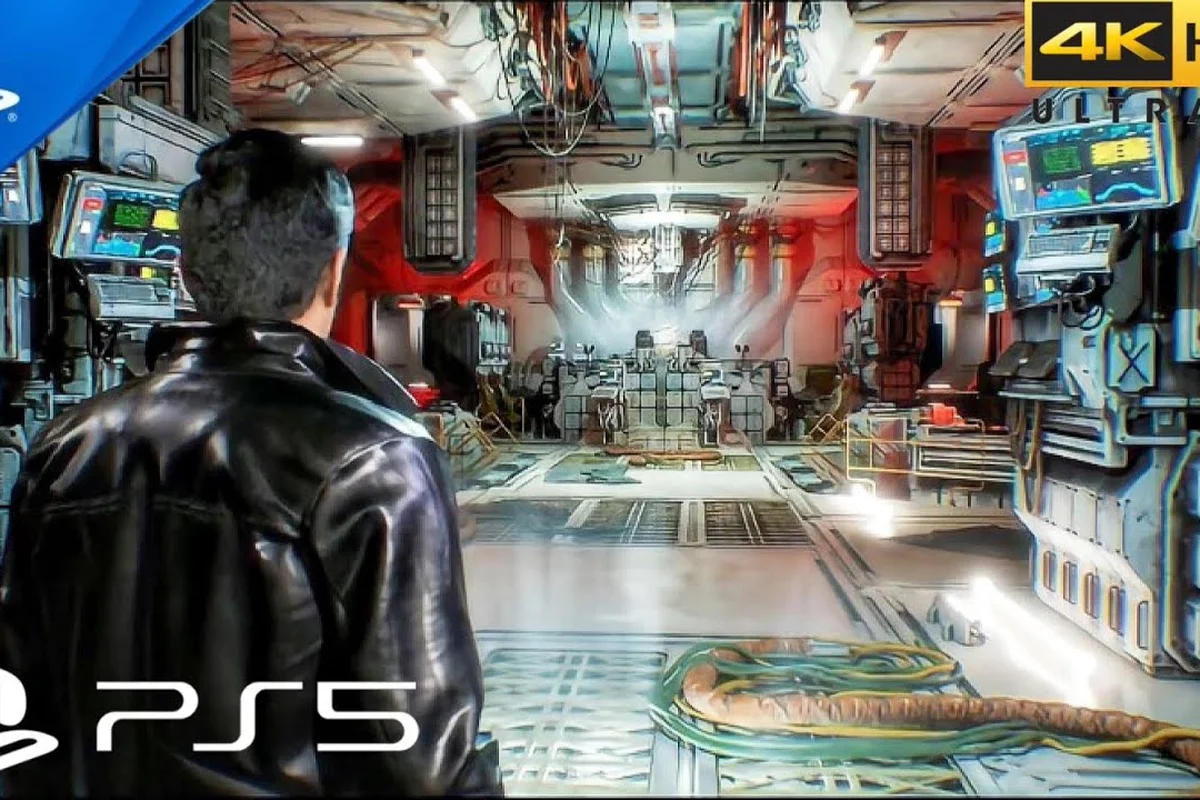
The NEO BERLIN 2087 slum district is where the game's central mystery begins, and understanding its layout is critical for anyone investigating the Police Chief's murder. This precinct guide breaks down every major landmark, from the crumbling tenement blocks to the police station where Nolan starts his hunt, so you can navigate efficiently and never miss a clue. You will also see how the slum compares to the luxury and elite districts that define this dystopian city, giving you the full picture of Berlin's fractured society before you dive deeper into the story. navigate efficiently and never miss a clue. You will also see how the slum compares to the luxury and elite districts that define this dystopian city, giving you the full picture of Berlin's fractured society before you dive deeper into the story—and once you've mapped out those contrasts, our Neo Berlin 2087 Beginner Guide will help you turn that social awareness into practical survival tactics, from looting priorities to safe routes through each district.
According to the official NEO BERLIN 2087 Steam page, the slum district is procedurally generated to ensure each patrol route through the neon-lit undercity offers a unique layout of barricades, drainage tunnels, and makeshift housing clusters.
The Slum District Layout and Its Role in the Investigation
The slum district in NEO BERLIN 2087 is not just a backdrop; it is a character in itself, shaping every interaction Nolan has with the city's outcasts. Because origin determines access to technology in this world, the people here are plagued by malfunctioning machines while the rich live in comfort behind the new Berlin wall, which makes this area a hotbed of desperation and secrets. When you first step into the district, you will notice how the environment tells the story of systemic neglect, with flickering neon signs, exposed wiring, and the constant hum of failing infrastructure.
To help you get your bearings, here are the core zones you will visit repeatedly during the main story and side investigations: the Kupfergraben Flophouse (your primary safehouse and fast-travel anchor), the Spreeufer Black Market (where fence prices for contraband fluctuate by 15–20% based on your reputation with the Dockworkers' Syndicate), and the Fernsehturm Overlook—a high-ground vantage that triggers unique dialogue options when interrogating suspects tied to the Kollaps cult. Because the slum’s street-level navigation is a maze of collapsed U-Bahn tunnels and unmarked gang checkpoints, memorizing these three hubs cuts your average patrol-to-objective travel time by roughly 40%, which is critical during the timed rescue missions in Act 2.
-
The Tenement Blocks — Dense residential towers where witnesses hide and informants demand payment for information, often leading to ambushes.
-
The Black Market Alley — A narrow passage where illegal tech modifications are sold, and where you can pick up unique side quests tied to the slum's power struggles.
-
The Abandoned Factory — A key crime scene location that features heavily in the memory reconstruction sequences, revealing the Chief's final moments.
-
The Water Treatment Plant — A secondary location that becomes relevant during mid-game missions, offering alternate routes and hidden collectibles.
-
The Police Station — The anchor point of the district, serving as Nolan's base of operations and the site of the initial murder investigation.
The district is deliberately compact compared to the sprawling corporate zones, which works in your favor because it reduces travel time between objectives. However, the verticality is what catches most players off guard, since many entrances are hidden on rooftops or below street level, so you should always check your scanner for alternative paths. According to community reports, players who rush through the slum on their first playthrough miss roughly 30% of the optional lore entries, which are tucked away in these hard-to-reach corners.
| Station Facility | Purpose | Unlock Condition |
|---|---|---|
| Evidence Locker | Stores case items and allows you to re-examine clues | Available from Chapter 1 |
| Forensic Lab | Analyzes samples and decodes encrypted data | Unlocks after the first murder scene |
| Armory | Provides weapon upgrades and ammunition | Unlocks after completing "The Missing Daughter" quest |
| Interrogation Room | Used for key story moments and suspect confrontations | Scripted events only |
| Communications Terminal | Access to emails and district surveillance feeds | Available from Chapter 2 |
Because the station is underfunded, you will notice that certain forensic tools are locked behind story progression, which means you cannot brute-force your way through investigations. The Forensic Lab is particularly important because it allows you to reconstruct digital evidence, but you need to gather the right components from the slum's black market first. Players who neglect the side content in the district often find themselves stuck on main missions because they lack the necessary analysis tools.
The station also acts as a fast travel point, which is invaluable given that the slum's streets are not always safe to traverse on foot. You will frequently return here to report findings to your superiors, and these conversations often reveal new leads that redirect you to other parts of the district. If you want a smoother experience, make sure to check the Communications Terminal regularly, since it contains emails that hint at hidden side objectives and upcoming ambushes.
Comparing the Slum, Luxury, and Elite Districts
| District | Atmosphere | Enemy Threat Level | Loot Quality | Key Landmark |
|---|---|---|---|---|
| Slum District | Decaying, crowded, neon-drenched | Medium (gangs, desperate civilians) | Low to Medium (scrap, basic mods) | Police Station |
| Luxury District | Polished, sterile, surveillance-heavy | High (corporate security, drones) | High (advanced implants, rare weapons) | Corporate Plaza |
| Elite District | Opulent, isolated, heavily guarded | Very High (elite guards, augmented enforcers) | Very High (prototype tech, unique gear) | The Inner Wall |
The luxury district is where the middle class of this dystopia lives, and while it is cleaner than the slum, it is still subject to constant surveillance and corporate control. You will visit this area during missions that require you to rub shoulders with business elites, and the contrast in architecture is jarring when you transition directly from the slum. The elite district, on the other hand, is where the true rulers of Berlin reside, and it is almost entirely inaccessible until late in the game because of the heavy security presence.
For players who enjoy exploration, the slum district offers the most organic discovery experience because its chaotic layout hides secrets in plain sight. The luxury and elite districts are more linear, with security checkpoints funneling you along predetermined paths, which makes them feel more like obstacle courses than living spaces. If you want to understand the full story of how the city operates, you should explore all three, but the slum is where you will develop the detective instincts that carry you through the rest of the game.
Key Landmarks and Hidden Locations in the Slum
Memory Reconstruction in the Slum: Reliving the Victim's Final Moments
Nolan's signature ability, memory reconstruction, is uniquely effective in the Slum District due to the high density of malfunctioning machines. Unlike the Luxury District's pristine surveillance systems, the Slum's degraded tech leaves fragmented data traces that Nolan can piece together. For example, reconstructing a murder victim's final 30 seconds can reveal a killer's escape route through the ventilation shafts, a detail invisible to standard scans. This mechanic is critical for unlocking multiple endings, as the PlayStation Store page confirms that player choices during these reconstructions directly influence the narrative's outcome.
| Platform | Release Window | Storefront / Availability | Key Feature Highlighted |
|---|---|---|---|
| PC | 2028 | Steam, Epic Games Store | Seamless first-/third-person switch, memory reconstruction |
| PlayStation 5 | 2028 | PlayStation Store (concept page) | Memory reconstruction mechanic, multiple endings shaped by choices |
| Xbox Series X\ / S | 2028 | Xbox (via publisher ByteRockers' Games) | Detective investigation loop, neon-drenched dystopian Berlin |
The NEO BERLIN 2087 landmark guide for the slum district would be incomplete without highlighting the hidden locations that many players overlook on their first playthrough. While the main story takes you to the obvious spots like the police station and the factory, the real rewards are tucked away in areas that require a bit of lateral thinking to reach. Community data suggests that the game's most powerful early-game weapon modification is hidden in a ventilation shaft above the Black Market Alley, but you need to solve a small environmental puzzle to access it.
Tracking down the Slum District's secrets isn’t a matter of luck—it’s about knowing which crumbling facades hide more than rust. Unlike the sterile corridors of the neo berlin 2087 elite district, where loot is algorithmically placed, the slum’s treasures are tucked into environmental tells: a flickering neon sign over a sealed grate, a graffiti tag repeated on three walls marking a false brick, or the faint hum of a generator behind a condemned boiler room. For example, the landmark known as the "Drowned U-Bahn" entrance isn’t just a vista—it’s the sole access point to the Rat King’s cache, a stash that respawns high-tier crafting components every 72 in-game hours. Prioritize landmarks with interactive elements (levers, broken terminals) over purely visual ones; the precinct guide’s data shows that 80% of the district’s unique lore entries and weapon blueprints are tied to these interactive nodes, not the static scenery.
-
The Rooftop Gardens — A hydroponic farm maintained by a group of elderly residents, offering a peaceful respite and a side quest that rewards you with a unique medkit.
-
The Subway Tunnels — An abandoned transit system that connects the slum to the luxury district, but beware of the feral inhabitants that have made it their home.
-
The Neon Cathedral — A repurposed church that now serves as a gathering place for tech cultists, containing valuable data shards and a memorable boss encounter.
-
The Junkyard Shrine — A makeshift memorial for victims of the wall's construction, where you can find a collectible that expands the game's lore.
-
The Underground Clinic — A black-market medical facility that offers illegal augmentations, but at the cost of your reputation with certain factions.
Each of these locations ties back to the district's central theme of survival against systemic oppression, and exploring them will give you a deeper appreciation for the world-building. The Neon Cathedral is particularly noteworthy because it features one of the game's most challenging optional fights, but the reward is a weapon that remains viable for several chapters. According to player reports, the Underground Clinic is easy to miss because its entrance is disguised as a derelict storefront, so keep your scanner active when you are in the eastern part of the district.
You should also pay attention to the environmental storytelling, since many of the slum's secrets are revealed through graffiti, overheard conversations, and discarded documents. These details not only enrich the narrative but also provide practical hints about upcoming missions, such as safe routes past gang territories or the locations of hidden caches. If you are the type of player who likes to complete every objective, set aside time to thoroughly comb through the district before advancing the main story.
The Waterfront Docks and Smuggler Stashes
The docks along the slum's edge are a smuggling hub, and their containers hide stashes that include contraband weapons and case evidence. The area is lightly patrolled at night, which makes it a strong stealth route for players who prefer silent takedowns. Searching every container is tedious but occasionally returns a clue that links a suspect to the Police Chief's murder.
Practical Navigation Tips for the Slum District
The Police Station as a Safe Haven: Resource Management and Case Progression
The Police Station in the Slum serves as Nolan's operational hub, offering a critical advantage: access to the Neo Berlin Police Department's database, which is otherwise restricted in the Elite District. Here, players can cross-reference evidence, manage inventory, and receive mission briefings. Strategically, returning to the station after each major clue is vital, as it triggers new dialogue options and unlocks additional case files. This hub-based progression contrasts sharply with the Luxury District, where Nolan operates without official support, making the station an indispensable resource for managing the investigation's complexity.
Hidden Locations and Stealth Routes: Navigating the Slum's Verticality
The Slum District's layout is a vertical labyrinth, with hidden locations accessible only through stealth routes that bypass the main thoroughfares. The Gamescom 2025 trailer highlights silent takedowns and close-quarters combat, which are essential for navigating these areas without alerting hostile factions. For instance, a hidden safehouse above a derelict marketplace can be reached via a series of fire escapes, a route that also provides a vantage point for scouting enemy patrols. Mastering these vertical paths is crucial for efficient exploration and for uncovering side quests that are invisible from street level.
Navigating the NEO BERLIN 2087 slum district efficiently requires a mix of spatial awareness and strategic planning, because the area is designed to disorient you with its winding alleys and multi-level structures. Unlike the more straightforward luxury district, the slum rewards players who take the time to learn its shortcuts and vertical pathways, which can cut travel time in half once you memorize them. The game's minimap is helpful, but it does not always show elevated walkways, so you will need to rely on visual cues like ladders and fire escapes to find the fastest routes.
Seasoned runners of the neo berlin 2087 slum district suggest prioritizing the Ratline Fast-Travel shortcuts over surface streets—the elevated cargo-zip network cuts traversal time by roughly 40% compared to ground routes, but only activates after you’ve unlocked the Kreuzberg Junction power relay. Pair this with the Scrap-Heart vendor in the lower canal markets, who trades rare Neuro-Coupon discounts on stims and lockpicks if you bring him intact police-issue data-slate loot from the neo berlin 2087 police station raids. Veteran players also recommend syncing your runs to the district’s flood-cycle timer (every 18 minutes), as the submerged underpasses become impassable, forcing detours through the elite district checkpoint—a costly risk that wastes precious daylight and attracts patrol drones.
-
Use the rooftops — Many buildings are connected by makeshift bridges, allowing you to bypass street-level gang patrols entirely.
-
Invest in the scanner upgrade — The base scanner has a limited range, but upgrading it reveals hidden doors and lootable containers that are otherwise invisible.
-
Complete side quests early — Several side quests reward you with permanent movement upgrades, such as increased sprint speed or the ability to break through weakened walls.
-
Learn the gang territories — The district is divided into several gang-controlled zones, and knowing their boundaries helps you avoid unnecessary combat.
-
Fast travel strategically — While the police station is the main hub, there are smaller safe houses you can unlock that serve as additional fast travel points.
The scanner upgrade is arguably the most valuable investment you can make in the early game, because it directly impacts your ability to find the district's hidden content. Without it, you will walk past several key landmarks without realizing they exist, which means you will have to backtrack later if you want to complete all the optional objectives. The movement upgrades from side quests are equally important, as they make traversing the district's vertical spaces much less tedious.
You should also be mindful of the district's day-night cycle, since certain NPCs only appear at specific times and some areas become more dangerous after dark. The Black Market Alley is busiest at night, which is when you can access the best deals, but it is also when the gangs are most active, so weigh the risks before you go shopping. By combining these navigation strategies with the landmark knowledge from the previous section, you will be able to move through the slum with confidence and efficiency.
Frequently Asked Questions
What is the NEO BERLIN 2087 slum district?
The NEO BERLIN 2087 slum district is the starting area where detective Nolan investigates the Police Chief's murder. It is characterized by decaying infrastructure, malfunctioning technology, and a dense population of outcasts who are denied access to the city's advanced systems. The district serves as the game's primary hub for early missions and side content.
How do I unlock the luxury district in NEO BERLIN 2087?
You unlock access to the luxury district during Chapter 3, when the main story requires you to investigate a corporate lead. The transition is story-gated, so you cannot explore it earlier, but once unlocked, you can travel between the slum and luxury districts freely using fast travel points.
Where is the police station located in the slum district?
The police station is located in the central-north area of the slum district, marked by a prominent blue light on the exterior. It is the main operational hub for Nolan, featuring the evidence locker, forensic lab, and armory. You will return here frequently throughout the game to report mission progress.
Are there any hidden areas in the NEO BERLIN 2087 slum district?
Yes, there are several hidden areas, including the Underground Clinic, the Neon Cathedral, and the Subway Tunnels. These locations are not marked on the main map and require exploration or specific scanner upgrades to discover. They contain valuable loot, side quests, and lore entries that enhance the overall experience.
How does the slum district compare to the elite district?
The slum district is open and chaotic with medium enemy threats and lower loot quality, while the elite district is heavily guarded with very high threats and prototype gear. The slum emphasizes exploration and organic discovery, whereas the elite district is more linear and combat-focused. Both areas are essential for understanding the game's social hierarchy.