
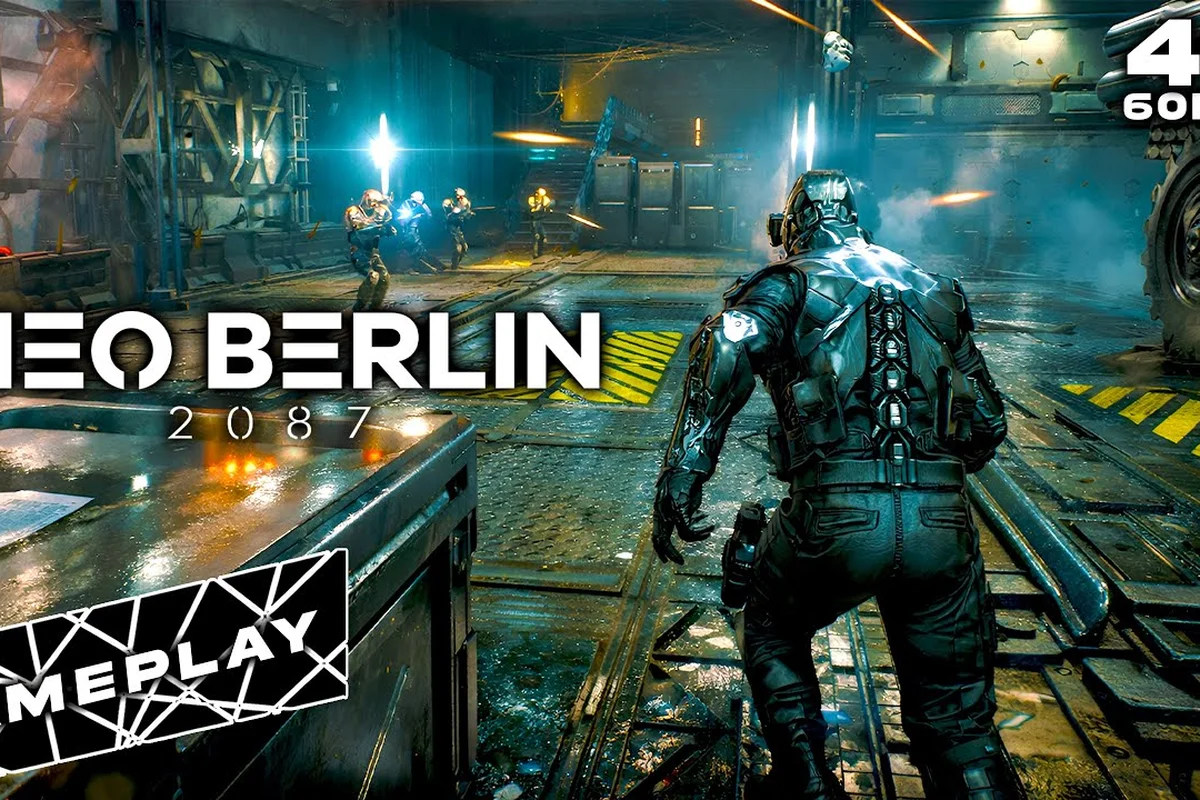
NEO BERLIN 2087 stealth mechanics go far beyond crouching in shadows and waiting for patrol routes to clear. The game's detection system rewards careful observation of enemy vision cones, environmental audio cues, and the memory reconstruction ability that lets you preview guard movements before you commit to a route. Understanding how these systems interact is the difference between a clean infiltration and a chaotic firefight that alerts every faction in the district.
The neo berlin 2087 stealth mechanics matter because they directly feed into the investigation loop — silent takedowns preserve the crime scene integrity, which means you recover higher-quality evidence fragments. When you go loud, witnesses scatter and key digital traces get wiped by automated security protocols. That loss compounds across the entire case file, locking you out of dialogue options and alternate ending paths. Discover how to read the threat indicator, manage your visibility meter, and chain stealth kills without triggering the alarm network that connects every camera in Neo Berlin.
Understanding the Core Stealth Loop and Detection Mechanics
Reading Replays to Plan Stealth Routes
Nolan's memory reconstruction ability, showcased in the Gamescom 2024 and 2025 trailers, functions as a pre-engagement reconnaissance scanner. Before entering a hostile zone, reconstructing a victim's final moments reveals enemy patrol routes and guard positions that the standard HUD won't display. This allows you to pre-plan a silent takedown corridor, mapping exactly which guards can be eliminated without triggering the detection meter. In the Police Chief's murder case, reconstructing the crime scene first lets you identify which environmental objects can be used as distractions, effectively turning a blind corner into a controlled kill zone.
Stealth Reconnaissance for the Police Chief's Murder Scene
The investigation of the Police Chief's murder and his daughter's disappearance requires a stealth-first approach to evidence gathering. Before engaging any suspects, use the memory reconstruction ability to scan the crime scene for non-lethal evidence, such as data shards or weapon trajectories. This silent reconnaissance prevents combat from destroying fragile clues. In the opening precinct level, a stealthy sweep of the upper offices reveals a security terminal log that identifies the killer's escape route, a detail missed if you trigger the alarm. This approach converts a standard firefight into a strategic evidence hunt, rewarding patience with a complete case file.
The stealth loop in NEO BERLIN 2087 operates on a three-phase rhythm: observe, position, and execute. Each phase feeds into the next, and skipping any step usually ends with a guard calling for backup. The observe phase relies on your scanning visor, which highlights enemy vision cones in translucent yellow and marks their patrol waypoints with dotted lines on the ground. When you hold the scan button, the game pauses the detection meter buildup, giving you time to plan a route without the pressure of a guard turning your way.
The position phase is where most players struggle, because the game's verticality system means you can often bypass ground-level patrols entirely by using maintenance shafts, rooftop connectors, and ventilation grates. However, these routes have their own risks — noise indicators show how much sound your movement generates, and sprinting across metal grating creates a noise radius that can alert enemies two floors below. The crouch-walk movement option reduces your noise radius to nearly zero but slows your traversal speed, which becomes a trade-off when a patrol loop brings a guard back to your position faster than you can move through.
The execute phase is where the neo berlin 2087 stealth mechanics shine, because the game offers multiple takedown options beyond the standard chokehold. The silent takedown is your bread-and-butter move — you grab an enemy from behind and neutralize them without alerting nearby guards. However, this move has a takedown animation window of roughly two seconds, during which you are vulnerable to detection if another enemy rounds the corner. The environmental takedown lets you use the level itself — pulling enemies into open elevator shafts, shoving them off rooftops, or triggering hazard panels that electrocute or gas them. These environmental options are riskier because they require precise positioning, but they also eliminate the body-disposal problem, since the environment removes the evidence for you.
| Stealth Mechanic | Detection Risk | Noise Output | Body Disposal | Best Use Case |
|---|---|---|---|---|
| Silent Takedown | Low | Silent | Manual (carry/hide) | Isolated guards on patrol |
| Environmental Takedown | Medium | Silent | Automatic | Guards near ledges/hazards |
| Stun Shot (Silenced Pistol) | Medium | Low | Manual | Distant enemies, quick follow-up |
| Lethal Throw (Knife) | High | Low | Manual | Emergency, last-resort kills |
| Hacking Takedown (Turret) | Low | Silent | N/A | Turret-controlled choke points |
Detection meter behavior follows a three-tier escalation system that the game never fully explains in its tutorial. The first tier is suspicion — the meter fills to about 30 percent, and the guard starts walking toward your last known position. The second tier is investigation — the meter sits between 30 and 70 percent, and the guard actively searches nearby hiding spots, including the ventilation shafts and locker rooms you might be using. The third tier is combat alert — the meter hits 100 percent, the guard fires a warning shot, and the alarm network activates, which pulls reinforcements from adjacent districts. The critical detail is that the detection meter decays over time, but only if you break line of sight completely and remain still for at least five seconds.
Silent Takedown Techniques and Stealth Kills Execution
Silent Takedown Execution in First-Person vs Third-Person
The seamless perspective switch, a core feature shown in the Gamescom 2025 gameplay trailer, directly impacts takedown reliability. In first-person, you gain a narrower field of view, making it easier to track a single guard's detection meter but harder to spot peripheral patrols. Third-person provides a wider environmental awareness, ideal for confirming no other guards are entering the room mid-animation. For a no-detection run, initiate takedowns in third-person to verify the area is clear, then switch to first-person for the final strike, minimizing the risk of an interrupted animation that would alert the entire Neo Berlin Police Department precinct.
Advanced Stealth for Malfunctioning Machine Encounters
Outcasts in 2087 are plagued by malfunctioning machines, creating unpredictable stealth scenarios. These machines often follow erratic patrol paths, making them harder to track than human guards. Instead of relying on memorized routes, use the environment to your advantage: lure a malfunctioning machine into a narrow corridor with a thrown object, then execute a silent takedown while it's stuck against a wall. This strategy is critical in the lower-city districts where machine density is high and combat alerts every unit in a 50-meter radius. Master this technique to clear entire outcast hideouts without firing a single bullet, preserving your health for the boss encounter.
Mastering the neo berlin 2087 silent takedown requires understanding the takedown positioning system, which determines whether you can execute a clean kill or whether the enemy breaks free. The game checks three factors before allowing a takedown: distance to target (you must be within arm's reach), angle of approach (you must be behind the enemy, within a 90-degree cone), and enemy awareness state (the target must be in the patrol or idle state, not the searching state). If any factor fails, the takedown prompt does not appear, and attempting to grab the enemy triggers a counter-attack that deals damage and alerts everyone nearby.
The stealth kills system extends beyond basic takedowns by rewarding chain executions — when you neutralize one enemy, the game opens a brief slow-motion window (roughly 1.5 seconds) during which you can target a second enemy within a certain radius. Chaining kills this way builds momentum, which fills a stealth combo meter. Each successful chain increases your critical takedown damage against alerted enemies, meaning you can one-shot enemies who would normally survive a standard takedown. The combo meter resets if you take damage, break line of sight for more than ten seconds, or trigger an alarm.
Takedown tool selection matters more than most players realize, because each tool has a distinct noise profile and recovery time. The standard blade is silent but requires you to be close enough to touch the target. The throwing knife lets you eliminate enemies from up to 12 meters away, but it makes a whistling sound that can alert enemies within a 5-meter radius. The silenced pistol is the most versatile option — it works at any range and the suppressor keeps the noise radius under 3 meters — but it consumes ammunition that is scarce in the early game. According to the official NEO BERLIN 2087 Steam page, the game emphasizes "stealth sections with silent takedowns" as a core pillar of the detective fantasy, which means you should expect to rely on these tools frequently.
Body disposal is the most overlooked aspect of the takedown guide because players assume that a silent kill means no consequences. In NEO BERLIN 2087, guards who discover a corpse enter the searching state and sweep the entire area, which can trap you in a hiding spot for several minutes. The game gives you two disposal options: carrying the body to a hiding spot (which slows your movement and increases your noise radius) or hiding the body in place (which works only if the body lands behind cover or in a container). The stealth and investigation synergy appears here — bodies left in open areas degrade the crime scene quality score, which reduces the evidence value you extract from the area.
| Takedown Tool | Effective Range | Noise Radius | Ammo Cost | Takedown Speed |
|---|---|---|---|---|
| Standard Blade | Melee (1m) | 0m | None | 2.0s |
| Throwing Knife | 12m | 5m | 1 knife | 1.2s |
| Silenced Pistol | 25m | 3m | 1 bullet | 0.8s |
| Stun Baton | Melee (1.5m) | 1m | Battery | 1.5s |
| Environmental | Varies | 0m | None | 2.5s |
Stealth vs Combat: When to Choose Each Approach
The neo berlin 2087 stealth vs combat debate is less about which approach is "better" and more about understanding what each path costs you in terms of investigation resources. The game's evidence system tracks how you handle each encounter, and it feeds that data into the case file that determines your ending options. A stealth approach preserves the environment — security cameras remain functional, data terminals stay accessible, and witnesses remain alive to interview later. A combat approach damages the environment — cameras get destroyed, terminals get shot out, and witnesses flee or die — which permanently removes those information sources from your investigation.
The stealth approach also affects your reputation with the Neo Berlin Police Department. Completing missions without raising alarms earns you discretion bonuses that unlock special dialogue options with your superiors and access to classified case files that are otherwise locked. However, the stealth approach is slower — clearing a facility without detection can take 20 to 30 minutes, whereas a combat approach can finish the same objective in under 10 minutes. The time cost matters because some side objectives have timed conditions — rescuing a hostage or intercepting a data transfer — that you will miss if you spend too long waiting for patrol windows.
Combat readiness is the other side of the equation, because the game does not let you stealth through every encounter. Some boss encounters and scripted ambush sequences force you into direct combat, which means you need a functional combat build even if you prefer the silent route. The neo berlin 2087 stealth mechanics include a combat fallback system — your weapon handling skills and armor rating remain relevant even in stealth runs, because a single detection can spiral into a full firefight. Players who neglect combat upgrades entirely often find themselves stuck in forced combat sections with underpowered weapons and no healing items.
Mixed approach strategies are where experienced players find the most success, because the game's encounter design rewards flexibility. The stealth and investigation loop works best when you use stealth to reach the objective point, then switch to combat only when the objective itself triggers an alarm — such as hacking a terminal that has a security response timer. The stealth achievements guide covers the no-detection runs in detail, but the core principle is that you should treat stealth as the default and combat as the contingency, not the other way around.
| Approach | Time per Encounter | Evidence Quality | Reputation Impact | Resource Cost |
|---|---|---|---|---|
| Full Stealth | 20-30 min | High | +Discretion | Minimal ammo |
| Mixed (Stealth+Combat) | 10-15 min | Medium | Neutral | Moderate ammo |
| Full Combat | 5-10 min | Low | +Aggression | Heavy ammo/health |
| Hacking/Environmental | 15-20 min | High | +Discretion | Gadget charges |
Stealth and Investigation Synergy: How Silence Improves Evidence
The neo berlin 2087 stealth and investigation connection is the game's most distinctive design choice, because it ties your combat approach directly to your detective work. When you enter a crime scene or hostile facility, the game tracks a scene integrity score that starts at 100 percent. Every gunshot, explosion, or combat takedown reduces this score by a set amount — a single gunshot costs 15 percent, an explosion costs 30 percent, and a combat takedown (where the enemy fights back) costs 10 percent. When the score drops below 70 percent, you lose access to high-quality evidence nodes that require pristine environmental conditions to extract.
The memory reconstruction ability is where this synergy becomes concrete. When you reconstruct a victim's final moments, the game overlays a ghost replay of the events leading up to the death. The quality of this reconstruction depends on the evidence fragments you collected — and those fragments degrade if the scene was disturbed by combat. A pristine scene yields fragments with high clarity, which reveal the victim's final conversation, the killer's silhouette, and sometimes the murder weapon's serial number. A disturbed scene yields fragments with low clarity, which show only the victim's final location and a vague sense of the attacker's presence.
The stealth approach preserves these evidence fragments because silent takedowns do not trigger the scene disturbance system — the game treats a silent takedown as a "clean" interaction that does not reduce the integrity score. This means you can neutralize every guard in a facility and still extract pristine evidence from the objective room, as long as you do not trigger any explosions or leave bodies in visible areas. The body disposal mechanic feeds into this, because a body left in the open counts as a scene disturbance even if the kill itself was silent.
Investigation bonuses from stealth extend beyond evidence quality. The neo berlin 2087 stealth mechanics reward you with investigation points for every silent takedown, which you can spend in the detective skill tree on abilities like enhanced scanning range, faster evidence extraction, and witness intimidation. These skills create a positive feedback loop — better stealth tools let you complete more silent takedowns, which earns more investigation points, which unlocks better stealth tools. The silent approach guide covers the camera counterplay and detector mechanics in depth, but the key takeaway is that stealth and investigation are not separate systems — they are two halves of the same loop.
| Scene Condition | Evidence Quality | Memory Reconstruction Detail | Investigation Points |
|---|---|---|---|
| Pristine (100%) | High Clarity | Full conversation + killer silhouette | +50 per node |
| Minor Disturbance (70-99%) | Medium Clarity | Partial conversation + location | +30 per node |
| Major Disturbance (<70%) | Low Clarity | Final location only | +10 per node |
| Combat Zone (<40%) | Fragmentary | No reconstruction possible | +0 per node |
Advanced Stealth Strategies for Difficult Encounters
Advanced stealth play in NEO BERLIN 2087 requires moving beyond the basics of crouching and waiting for patrol windows. The multi-floor detection system is one of the most misunderstood mechanics — guards on different floors can still hear your footsteps if you move too quickly, and they will investigate noise sources even if they cannot see you. The sound propagation system models how noise travels through the environment: metal surfaces amplify sound, carpeted areas muffle it, and open stairwells carry noise between floors. Learning to read these acoustic zones is essential for the stealthy walkthrough of high-security facilities.
The guard communication network is another layer that separates good stealth players from great ones. Guards in NEO BERLIN 2087 do not operate in isolation — they use hand signals and radio check-ins to maintain situational awareness. If you take down a guard, their last radio check-in creates a response window of roughly 60 seconds. If the next check-in does not occur, a search party is dispatched to the last known position. This means you cannot simply eliminate guards one by one — you need to either interrupt the radio system (by hacking the communications terminal) or time your takedowns to coincide with the check-in schedule, so the missing guard is not noticed until you have already left the area.
Gadget usage in advanced stealth revolves around distraction tools and environmental manipulation. The noise maker creates a sound source that draws guards toward it, but it has a limited battery — roughly three uses per charge. The holographic decoy projects a humanoid figure that confuses guards into investigating a false sighting, but it consumes energy cells that are expensive to craft. The emp grenade disables cameras and electronic locks in a radius, but it also disables your own scanning visor for a few seconds, leaving you temporarily blind. The line of sight guide covers the distraction and gadget mechanics in detail, including the silenced pistol loadout recommendations.
Boss encounter stealth is a special case, because most boss fights force combat, but a few allow stealth assassinations if you meet specific conditions. The optional boss in the Corporate Enclave can be eliminated without a direct fight if you sabotage the environmental controls in his office — triggering a gas leak that incapacitates him without alerting the floor below. The stealth kills in these encounters require you to have completed specific side missions that unlock the sabotage options, which is why the best build guide recommends investing in hacking skills even for combat-focused players.
| Advanced Tactic | Detection Risk | Resource Cost | Difficulty | Reward |
|---|---|---|---|---|
| Radio Interruption | Low | Hacking tool | Medium | Prevents search parties |
| Holographic Decoy | Low | 1 energy cell | Low | Creates 10s distraction |
| EMP Grenade | Medium | 1 grenade | Low | Disables electronics 8s |
| Environmental Sabotage | Low | Varies | High | One-shot boss elimination |
| Multi-floor Route | Medium | None | High | Avoids ground patrols |
Frequently Asked Questions
What is the most important stealth mechanic in NEO BERLIN 2087?
The detection meter is the most critical mechanic because it determines whether guards become suspicious, start searching, or trigger the alarm network. Managing line of sight and noise output keeps the meter below the 30 percent suspicion threshold, which prevents guards from leaving their patrol routes and simplifies your approach.
How do silent takedowns affect the investigation quality?
Silent takedowns preserve the scene integrity score because they do not count as scene disturbances. This means you can neutralize guards without degrading the memory reconstruction quality, allowing you to extract high-clarity evidence fragments that reveal crucial details like the killer's silhouette and the victim's final conversation.
Can I complete the game using only stealth?
Yes, but you need a combat fallback because several scripted encounters force direct combat. The game's stealth mechanics allow you to bypass most encounters, but boss fights and ambush sequences require functional combat skills. Invest in weapon handling upgrades even in stealth-focused builds to handle these forced confrontations.
What is the best takedown tool for stealth runs?
The silenced pistol is the most versatile option because it works at any range and keeps the noise radius under 3 meters. However, ammunition is scarce in the early game, so you should reserve it for emergencies and rely on the standard blade for routine takedowns. The throwing knife is a good middle ground for medium-range eliminations.
How does the stealth approach change the ending?
The stealth approach unlocks classified case files and special dialogue options with the Neo Berlin Police Department, revealing alternative resolutions to the Police Chief's murder conspiracy. Combat-only runs miss this evidence, locking you out of these ending paths entirely. Your discretion reputation determines which final revelations Nolan can access.